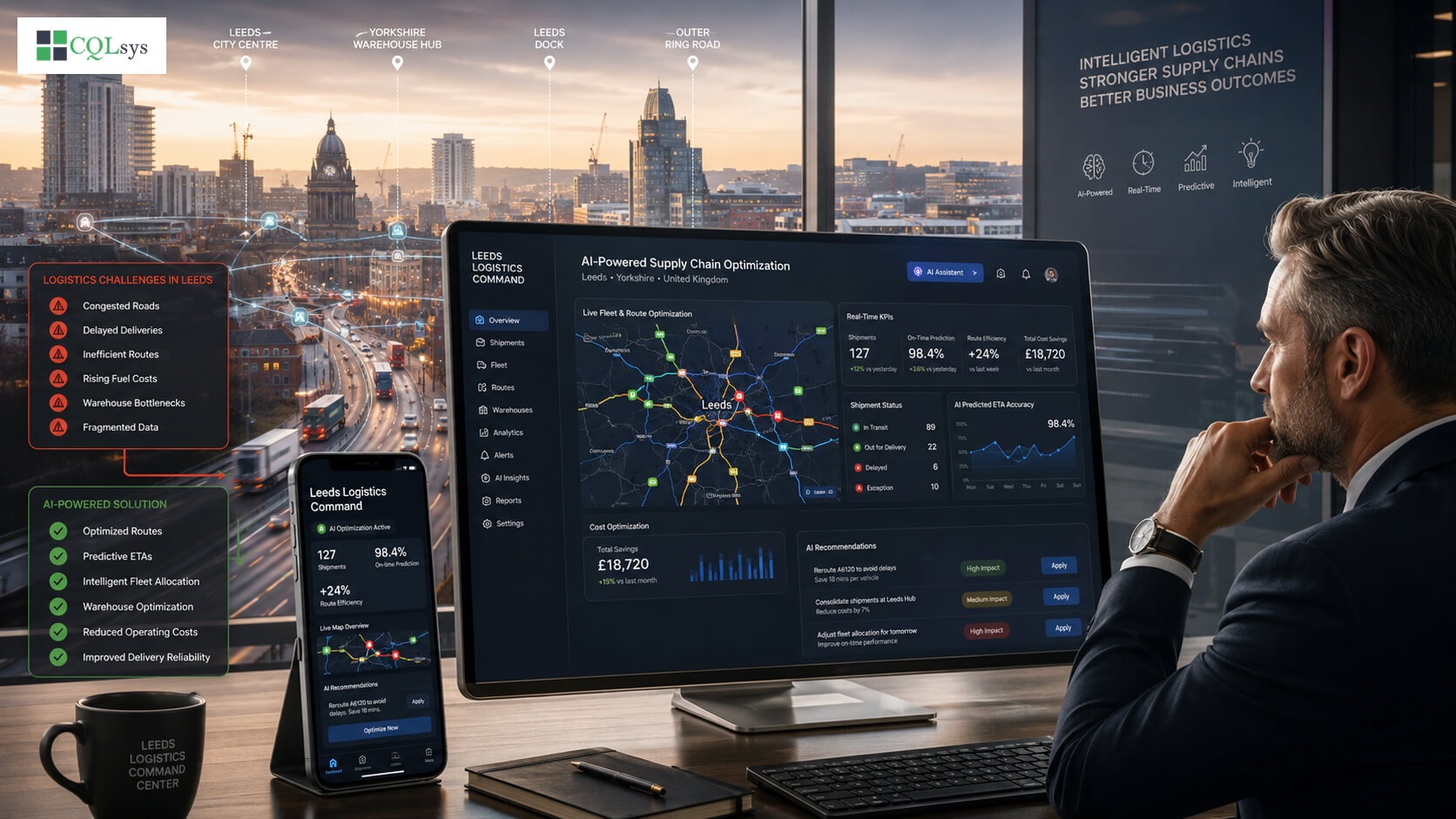
AI-Powered Supply Chain Optimization for Logistics Companies in Leeds
Leeds has firmly established itself as the central logistics and distribution capital of Northern England. Positioned at the strategic intersection of the M1, M62, and A1(M) motorways, West Yorkshire serves as the operational backbone for national freight networks, third-party logistics (3PL) providers, and complex distribution centers.
However, operating within this dense transport corridor presents severe operational hurdles: persistent motorway congestion around the Leeds Inner Ring Road and outer arterial links, escalating fuel costs, volatile fuel prices across the UK, shifting post-Brexit customs procedures, and demanding customer service-level agreements (SLAs).
Adopting strategic AI-powered supply chain optimization for logistics companies in Leeds is no longer a forward-looking experiment; it is an operational imperative for fleet operators seeking to preserve margins and expand capacity. Modern supply chain platforms move beyond static ERP tracking by using machine learning models, real-time sensor streams, dynamic route planning algorithms, and predictive demand analytics. By transitioning from reactive troubleshooting to proactive algorithmic management, logistics companies across Leeds and West Yorkshire can unlock substantial improvements in fleet efficiency, warehouse throughput, and overall profit margins.
Regional Logistics Dynamics: The West Yorkshire Advantage and Challenges
The Leeds City Region handles millions of tonnes of freight annually, acting as a vital bridge between northern manufacturing centers, eastern ports like Hull and Immingham, and southern consumer hubs. Leveraging this strategic position requires freight operators to address specific operational and structural constraints.
Key Drivers for Regional Innovation
- Strategic Hub Connectivity: Direct access to major trans-Pennine and north-south freight routes makes Leeds a natural choice for regional cross-docking and central fulfillment hubs.
- Growing E-Commerce Pressure: Local fulfillment centers face aggressive delivery windows, driving demand for automated last-mile routing and hyper-local inventory distribution.
- Sustainability Directives: The expansion of regional clean air initiatives across Yorkshire requires fleet managers to monitor carbon footprints, optimize vehicle loads, and lower deadhead mileage.
Core Operational Bottlenecks
- Urban & Intercity Congestion: Unpredictable traffic bottlenecks along key routes delay deliveries, increase fuel consumption, and cause driver schedule overruns.
- Legacy System Isolation: Many regional logistics companies rely on fragmented transport management systems (TMS) and warehouse management systems (WMS) that lack real-time predictive analytics capabilities.
- Volatile Demand Patterns: Fluctuating consumer ordering behaviors create imbalance between warehouse inventory levels and fleet capacity allocation.
Core Pillars of AI-Driven Supply Chain Optimization
Integrating artificial intelligence into logistics workflows fundamentally changes how data is processed and acted upon across the supply chain.
1. Dynamic Route Optimization and Autonomous Dispatch
Traditional static routing relies on historical distance averages that fail to account for live traffic congestion, bad weather, or sudden drop-off site delays. Machine learning algorithms process live telemetry, municipal traffic feeds, and historical pattern data to recalculate optimal delivery routes in real time. Automated dispatch engines match incoming freight requirements with vehicle capacity, driver shift limits, and geographic proximity to eliminate idle time and minimize overall fuel consumption.
2. Predictive Demand Forecasting & Inventory Alignment
Unplanned stockouts and overstocked warehouses tie up working capital and strain warehouse teams. Predictive analytics models evaluate historical sales data, local economic indicators, seasonal surges, and weather forecasts to predict regional SKU demand with high precision. This allows warehouse operators across West Yorkshire to pre-position high-turnover inventory, reducing picking travel distance and preventing costly stock shortages.
3. Machine Learning Fleet Maintenance
Unexpected vehicle breakdowns disrupt delivery schedules and incur high emergency repair expenses. Machine learning algorithms process Internet of Things (IoT) sensor data from engine control units (ECUs), monitoring engine temperatures, brake pad wear, tire pressure, and fluid degradation. By identifying early indicators of mechanical stress before critical failure occurs, logistics operators can schedule maintenance during planned downtime, extending vehicle lifespans and reducing repair costs.
4. Automated Warehouse Management & Cross-Docking
Within modern fulfillment centers, AI algorithms streamline slotting strategies by placing frequently ordered items closer to packing stations. Machine learning models coordinate automated guided vehicles (AGVs) and warehouse personnel pathways, eliminating wasted travel time across large distribution footprints. For cross-docking facilities, AI match-making services sync inbound long-haul trailers directly with outbound last-mile delivery vans, minimizing temporary staging requirements.
High-Level Solution Architecture
An enterprise-grade supply chain platform relies on a modular, event-driven architecture designed to process high-throughput data streams, execute predictive models, and sync seamlessly with external enterprise systems.
System Architecture Flow
Data streams from IoT fleet sensors, GPS trackers, WMS platforms, and weather services enter through the Security Layer via API endpoints. The ingestion layer routes data to the Machine Learning Engine for continuous analysis, which feeds actionable recommendations into core business services before presenting real-time insights across administrative and driver applications.
Architectural Component Breakdown
- 1. User & Experience Layer: Provides dedicated, role-specific interfaces: web dashboards for operational managers to oversee fleet metrics, desktop interfaces for warehouse controllers to manage inventory flows, and responsive mobile applications for drivers to view optimized routes, accept dispatch updates, and capture digital proof of delivery (ePOD).
- 2. Security & Perimeter Layer: Shields enterprise endpoints using Web Application Firewalls (WAF), secure token-based access controls (OAuth2/OpenID Connect), continuous traffic filtering, and granular Role-Based Access Controls (RBAC) to ensure corporate data integrity.
- 3. Data Ingestion & Integration Layer: Acts as the central nervous system for external and internal data flows. Connects via REST APIs, Webhooks, and event streaming tools to collect real-time data from vehicle telematics, third-party GPS systems, regional weather channels, traffic management feeds, and client ERP frameworks.
- 4. AI & Analytics Core Engine: Houses specialized machine learning models dedicated to specific operational tasks: neural networks for predictive demand planning, spatial optimization algorithms for multi-stop vehicle routing, and anomaly detection engines for proactive fleet maintenance alerts.
- 5. Storage & Processing Layer: Uses a dual-storage model to separate fast operational data from historical analytics. Transactional databases process active delivery orders, low-latency caches handle live vehicle coordinates, and scalable cloud data lakes store historical logs for long-term machine learning model training.
Technology Stack Selection
Building a high-availability, scalable supply chain platform requires selecting modern frameworks designed for real-time processing, secure integrations, and intuitive interfaces.
| Component Layer | Recommended Technology | Business Purpose | Operational Advantages |
|---|---|---|---|
| Frontend Applications | React / Next.js / React Native | Interactive web control portals and cross-platform mobile apps for drivers. | High-speed rendering, low resource consumption, unified codebase across mobile platforms. |
| Backend Microservices | Node.js / Python (FastAPI) | Managing API transactions, real-time message routing, and microservices execution. | Asynchronous event processing, high concurrent connection management, fast data routing. |
| AI & ML Engines | Python (PyTorch, TensorFlow, Scikit-learn) | Building demand forecasting, route planning algorithms, and anomaly detection. | Industry-standard libraries, flexible model customization, robust framework support. |
| Real-time Data Streaming | Apache Kafka / RabbitMQ | High-throughput streaming of vehicle telematics and GPS coordinates. | Sub-second data transfer, fault-tolerant message queueing, scalable log handling. |
| Database Architecture | PostgreSQL (PostGIS) / Redis | Storing relational business data, spatial location points, and real-time caching. | Native geospatial spatial query support, rapid in-memory caching for live fleet positions. |
| Cloud Infrastructure | AWS UK Region (London) / Azure UK | Secure cloud hosting keeping application data within UK legal jurisdictions. | Low latency for UK traffic, automated resource scaling, strict compliance standards. |
Traditional Logistics Operations vs. AI-Powered Supply Chains
Transitioning from manual workflows and legacy transport software to a modern AI-driven platform introduces clear operational improvements across every phase of fulfillment.
| Operational Area | Traditional Logistics Operations | AI-Powered Supply Chain Architecture |
|---|---|---|
| Route Planning | Static routes built using fixed distance matrices and regional driver familiarity. | Dynamic multi-variable route adjustments based on live traffic, weather, and access rules. |
| Fleet Dispatch | Manual assignment of loads based on phone calls, whiteboards, and fixed spreadsheets. | Automated predictive dispatch matching vehicle capacity, driver hours, and drop locations. |
| Demand Forecasting | Historical sales averages calculated manually at the end of every quarter. | Predictive machine learning models updated daily using multi-source data signals. |
| Maintenance Scheduling | Reactive repairs following breakdowns or fixed calendar-based service intervals. | Predictive maintenance based on live sensor streams and early fault detection. |
| Warehouse Picking | Manual paper pick lists organized by static aisle numbers without path optimization. | Dynamic route picking paths coordinated via mobile interfaces and automated slotting. |
| Supply Chain Visibility | Delayed status updates based on manual check-in calls from drivers. | Real-time tracking and automated ETA calculations shared across all stakeholders. |
Practical Use Cases for Leeds Logistics Operations
Custom AI platforms address real-world challenges faced by transport operators across West Yorkshire.
1. Trans-Pennine Corridor Route Optimization
Logistics operators transporting freight between Manchester and Leeds via the M62 frequently encounter delays due to adverse weather over the Pennines and highway construction. AI routing platforms analyze micro-climate forecasts, lane closure announcements, and real-time traffic speeds to reroute vehicles onto lower-congestion arterial routes before delays impact delivery windows.
2. Urban Last-Mile Delivery Management
Navigating narrow streets and pedestrian zones in central Leeds presents unique delivery challenges. AI last-mile platforms calculate optimal delivery sequences, factor in low-emission zone parameters, assign optimal parking spots for delivery personnel, and send precise 15-minute delivery windows to end customers to minimize failed delivery attempts.
3. Cross-Docking Efficiency for Food & Beverage Distributors
Cold-chain logistics companies operating out of West Yorkshire distribution parks require tight temperature management and fast freight handling. Machine learning engines coordinate dock door assignments in real time, matching incoming refrigerated trailers with outbound vehicles to streamline product movement and maintain required temperature controls.
Financial ROI, Cost Structure, and Business Impact
Implementing custom AI supply chain software involves upfront investments that are offset by rapid, quantifiable operational savings.
Primary Investment Factors
- System Integration Effort: Engineering secure API bridges between legacy WMS/TMS platforms and modern cloud microservices.
- Custom ML Model Development: Training machine learning algorithms on proprietary historical delivery and inventory data.
- Telematics Hardware Setup: Equipping legacy vehicle fleets with advanced IoT diagnostic sensors and mobile driver terminals.
- Staff Onboarding & Training: Upskilling dispatch managers, warehouse teams, and drivers to use new automated software interfaces.
Measurable ROI Metrics
Deploying AI supply chain solutions delivers concrete operational improvements:
- 12% to 18% Reduction in Fuel Spend: Achieved by minimizing engine idling, preventing traffic delays, and removing redundant delivery miles.
- 20% to 35% Increase in Fleet Utilization: Enabled by automated load-matching algorithms that eliminate empty return journeys.
- Up to 45% Decrease in Unplanned Downtime: Realized through predictive sensor monitoring and proactive maintenance scheduling.
- 25% Improvement in On-Time In-Full (OTIF) Deliveries: Driven by automated dispatching and real-time ETA accuracy across customer delivery networks.
Security Framework & Compliance Standards
Logistics systems handle valuable enterprise data, including customer addresses, supplier financial terms, and vehicle tracking coordinates. Maintaining strict platform security and regulatory compliance is vital.
Key Compliance & Security Controls
- Data Protection & UK GDPR: Processing customer delivery details, address databases, and staff information in full compliance with UK Data Protection Act regulations.
- AES-256 and TLS 1.3 Encryption: Enforcing strong encryption for data stored at rest within cloud databases and all live data moving across network connections.
- Role-Based Access Management (RBAC): Restricting platform access based on strict operational requirements so drivers, dispatchers, and executive admins only see relevant data.
- Immutable Audit Logging: Capturing complete logs of system changes, manual route overrides, dispatch decisions, and data access requests for compliance reporting.
Implementation Roadmap for Logistics Companies
Adopting AI software requires a structured, phased deployment plan that minimizes disruption to ongoing delivery operations.
- Phase 1: Operational Discovery & Data Audit: Assess existing TMS, WMS, and fleet telematics infrastructure; evaluate data hygiene standards; and identify core operational pain points across the supply chain network.
- Phase 2: Architecture & Model Prototyping: Define custom cloud architecture, design data ingestion pipelines, and train initial machine learning models using historical fleet telemetry and delivery records.
- Phase 3: Integration & System Engineering: Build secure API connectors between central ERP systems, cloud microservices, external mapping platforms, and driver mobile applications.
- Phase 4: Controlled Pilot Testing: Deploy the platform within a specific fleet division or warehouse zone (e.g., local Leeds fulfillment routes) to validate route accuracy, baseline fuel savings, and system reliability.
- Phase 5: Fleet-Wide Deployment & Operational Scaling: Roll out the software across all regional distribution routes, enable automated dispatch engines, and integrate mobile driver tools across all operating vehicles.
- Phase 6: Continuous Algorithmic Optimization: Monitor ongoing model performance, incorporate real-world driver feedback, refine predictive algorithms, and introduce additional automation workflows based on operational metrics.
Why Choose CQLsys Technologies?
Implementing complex AI software requires an engineering partner who understands both advanced software architecture and operational business needs.
CQLsys Technologies specializes in custom software design, enterprise system integration, and advanced AI engineering. We help logistics and transport businesses build scalable platforms that streamline operations and increase profitability.
Our Core Expertise
- Tailored AI Software Architecture: Delivering purpose-built AI development services designed specifically around your operational rules and fleet workflows.
- Enterprise Software Engineering: Modernizing legacy infrastructure through robust, custom-designed software development solutions.
- High-Performance Web Platforms: Building intuitive, real-time command dashboards powered by specialized web development solutions.
- Driver & Operational Mobile Apps: Creating user-friendly driver applications and ePOD systems through comprehensive mobile app development.
Our teams work alongside your operations, engineering, and logistics leads to transform complex data streams into actionable operational tools. Learn more on our about us page or read our latest technical engineering articles on the CQLsys tech blog.
Frequently Asked Questions
1. What is the typical cost of developing a custom AI supply chain optimization platform in Leeds?
Development costs vary based on overall system complexity, fleet size, and integration requirements. Initial operational MVPs focusing on route optimization and telematics tracking typically range from £35,000 to £70,000. Comprehensive enterprise platforms incorporating predictive demand planning, automated dispatching, multi-warehouse management, and complex ERP integrations generally range between £75,000 and £150,000+.
2. How does predictive analytics improve fleet management for West Yorkshire transport firms?
Predictive analytics uses historical transit times, continuous traffic updates, local weather forecasts, and vehicle diagnostic data to evaluate delivery conditions in real time. This allows fleet managers to proactively prevent delays, schedule vehicle maintenance before mechanical failures occur, optimize fuel usage, and provide accurate delivery ETAs to clients.
3. Can an AI supply chain platform integrate with our existing WMS and ERP software?
Yes. Modern AI platforms use standardized REST APIs, Webhooks, and secure integration layers to connect seamlessly with legacy platforms such as SAP, Oracle, Sage, Manhattan, or custom-built WMS software. This ensures data flows smoothly without requiring complete system replacements.
4. What are the immediate benefits of AI route optimization for Leeds logistics providers?
Key benefits include an immediate 12% to 18% reduction in total fuel spend, shorter transit times along congested motorway corridors like the M1 and M62, higher daily delivery volume per vehicle, reduced vehicle wear and tear, and improved customer satisfaction scores.
5. How long does it take to deploy an AI-powered supply chain platform?
A standard implementation takes between 4 and 9 months from initial project discovery to full operational deployment. Key phases include Discovery & Data Structuring (4-6 weeks), Core Development & AI Integration (12-16 weeks), Security & Pilot Testing (4-6 weeks), and Fleet Deployment (4 weeks).
6. Is cloud infrastructure required for running AI-driven logistics solutions?
Cloud infrastructure provides the scalable processing power and storage necessary to analyze large streams of real-time telematics and spatial data. Hosting on UK-based regions (such as AWS London or Azure UK) ensures low-latency performance and complete compliance with local data residency laws.
7. How does machine learning improve warehouse inventory forecasting?
Machine learning algorithms analyze historical order data, seasonal trends, external economic factors, and geographic demand surges to project future SKU inventory needs. This prevents overstocking, minimizes stockout risks, and optimizes warehouse pick paths to accelerate overall order processing speeds.
8. What data protection regulations apply to UK-based AI supply chain platforms?
Logistics platforms operating in the UK must comply fully with the UK Data Protection Act and UK GDPR regulations. This requires securing personal driver and customer details through end-to-end data encryption, strict access permissions, transparent data retention policies, and secure UK-based cloud hosting.
9. Why choose custom AI development over commercial off-the-shelf software?
Off-the-shelf software often forces logistics providers to adapt their operational workflows to fixed vendor constraints and charges recurring per-vehicle licensing fees. Custom AI solutions are tailored to your exact business rules, integrate smoothly with your existing software stack, adapt as your operational needs evolve, and provide a proprietary competitive advantage without ongoing vendor fees.
10. How does CQLsys Technologies support West Yorkshire logistics businesses with AI adoption?
CQLsys Technologies offers complete engineering services, from initial technical discovery and architecture design to AI model development, cloud integration, and ongoing system support. We work closely with your technical and operations teams to build high-performance software tailored to your commercial objectives.
Optimize Your Supply Chain Architecture with AI
Transforming regional transport operations requires moving beyond static processes toward intelligent, data-driven systems. Implementing custom AI supply chain optimization enables logistics companies across Leeds and West Yorkshire to cut fuel overheads, maximize fleet utilization, and deliver exceptional service levels.
Ready to upgrade your logistics operations? Contact CQLsys Technologies today to schedule a technical discovery session with our software architecture consultants.
Connect with CQLsys Technologies:
- LinkedIn: CQLsys Technologies on LinkedIn
- Facebook: CQLsys Technologies on Facebook
- Instagram: CQLsys Technologies on Instagram