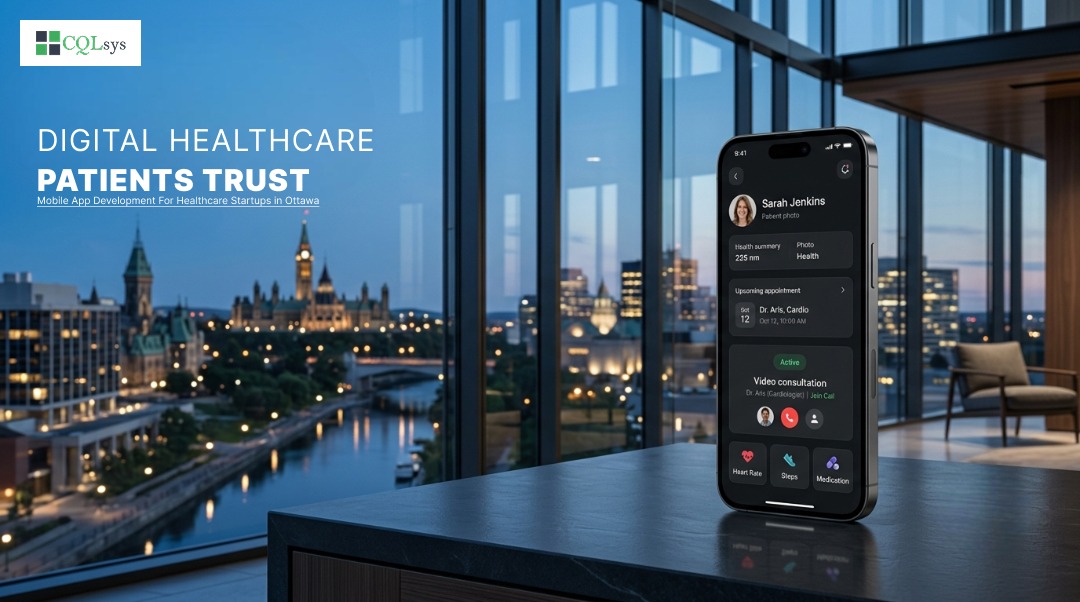
Mobile App Development for Healthcare Startups in Ottawa: Delivering Digital Healthcare Patients Trust
Ottawa has rapidly emerged as a leading technology and healthtech innovation hub in Canada. Driven by world-class research institutions, academic medical centers, and a thriving ecosystem of digital health pioneers, the capital city offers an ideal launchpad for healthcare ventures. However, building mobile app development for healthcare startups in Ottawa requires navigating a complex intersection of clinical workflow requirements, strict Canadian privacy mandates, and high consumer expectations.
To succeed in today's competitive digital ecosystem, healthtech founders cannot simply launch an appealing user interface; they must engineer platforms grounded in absolute security, regulatory compliance, and architectural reliability. Patients and healthcare providers demand digital tools that protect personal health data while delivering real-time access to care.
The Ottawa Digital Health Landscape: Market Dynamics & Startup Opportunities
Ottawa’s healthtech sector operates within a unique regulatory and market framework. Unlike consumer software, healthtech platforms face strict oversight from Health Canada, provincial authorities, and privacy commissioners. For a startup, launching a product in Ottawa means designing for compliance from day one while solving real operational bottlenecks across clinical networks.
Regulatory Compliance as a Foundation
Healthtech startups operating in Ottawa must comply with Ontario’s Personal Health Information Protection Act (PHIPA) alongside federal PIPEDA regulations. Any mobile application collecting, transmitting, or storing Personal Health Information (PHI) must implement strict administrative, physical, and technical safeguards. Designing for regulatory compliance from the outset ensures smooth privacy impact assessments and avoids costly re-engineering down the road.
Interoperability Across Systems
A healthcare app cannot exist in an isolated environment. To provide true clinical value, apps must connect with regional health networks using established interoperability standards like FHIR and HL7. Real-time synchronization with existing Electronic Health Record (EHR) and Electronic Medical Record (EMR) systems allows care providers to access vital patient data without disrupting their established clinical routines.
Frictionless User Experience & Clinical Reliability
Modern patients expect their healthcare apps to offer the intuitive accessibility of modern consumer platforms, complete with virtual visits, lab access, and automated scheduling. Simultaneously, healthcare providers require unwavering clinical reliability. Striking a balance between an accessible, human-centered UI and an enterprise-grade, high-availability backend forms the foundation of sustained user adoption.
Institutional Ecosystem & Partnership Potential
With institutions such as The Ottawa Hospital, CHEO (Children's Hospital of Eastern Ontario), and the Ottawa Heart Institute leading digital transformation initiatives, startups have substantial opportunities for clinical validation, pilot projects, and enterprise distribution.
Core Pillars of Patient-Trusted Healthcare Apps
Building patient trust is not an aesthetic choice; it is a structural imperative. When users download a healthcare application, they entrust the platform with sensitive medical histories, diagnostic files, and personal identifiers.
Establishing patient trust requires a multi-faceted operational approach:
- Data Privacy & Compliance: Protecting health records requires end-to-end data encryption (AES-256) both in transit and at rest, strict zero-trust access controls, and transparent consent workflows that let users decide how their data is shared.
- High Availability & System Resiliency: Clinical communication tools and remote monitoring systems must rely on multi-AZ cloud redundancy to guarantee continuous uptime, ensuring critical diagnostic workflows remain uninterrupted.
- Real-time Clinical Accuracy: Integrating standardized FHIR and HL7 APIs ensures that clinical data updated on the app reflects instantly across associated hospital EMR databases without data corruption.
- Inclusive Experience Design: Interfaces designed around WCAG 2.1 AA accessibility guidelines make health applications usable for elderly individuals, patients with visual or motor impairments, and users with lower digital literacy.
Essential Features for Next-Gen Healthcare Applications
To secure market traction and sustain user engagement, healthcare mobile apps must combine essential administrative functionalities with advanced clinical capabilities.
For Patients
- Secure Patient Portals: Multi-factor authenticated profile management for viewing clinical summaries, lab results, and care plan histories.
- Telemedicine & On-Demand Consultations: Low-latency WebRTC video integration paired with in-app queue management for virtual visits.
- Smart Appointment Scheduling: Automated calendar synchronization, direct integration with clinic management systems, and SMS/push reminders.
- Remote Patient Monitoring (RPM): Real-time tracking of vital signs by integrating with wearable medical devices via Bluetooth Low Energy (BLE).
For Healthcare Providers
- EHR/EMR Clinical Dashboards: Consolidated patient timelines providing instant visibility into historical diagnoses, vitals, and progress notes.
- Secure Provider Messaging: Encrypted communication channels supporting peer-to-peer case collaboration, image sharing, and direct patient outreach.
- E-Prescription Management: Direct routing of digital prescriptions to local pharmacies using validated health informatics standards.
- Automated Clinical Documentation: Digital form capture and automated triage workflows that minimize administrative overhead for care teams.
Solution Architecture: Engineering a Scalable Healthtech Platform
Building a production-ready digital health application requires a robust architecture capable of handling heavy data flows, real-time messaging, and strict access controls. Partnering with experienced team members in custom software development ensures the application is built for long-term scalability and compliance.
High-Level System Architecture
A production-ready healthcare architecture flows across five core operational layers:
- User Experience Layer: Mobile clients (iOS Swift and Android Kotlin/Flutter) communicate with the system using HTTPS and TLS 1.3 encryption.
- Security & Gateway Layer: A Web Application Firewall (WAF) inspects incoming traffic while API Gateways handle OAuth2 authentication, token validation, and rate limiting.
- Microservices Engine: Core business logic operates across decoupled microservices, isolating core features like identity management, video streaming, and remote health telemetry.
- Interoperability & Storage Layer: A dedicated FHIR/HL7 engine standardizes health records before storing them in encrypted relational databases (such as PostgreSQL) and cloud storage buckets.
- External Integration Layer: Secure webhooks connect the system directly with external hospital EMRs (like Epic or Cerner) and third-party pharmacy networks.
Layer-by-Layer Architecture Breakdown
- Experience Layer: Native (Swift/Kotlin) or cross-platform framework frontends that deliver fast performance, smooth offline caching, and responsive UI rendering.
- Security & API Layer: Enforces zero-trust access control using Web Application Firewalls (WAF), mutual TLS (mTLS), and API Gateways that validate JSON Web Tokens (JWT) before passing traffic downstream.
- Microservices Layer: Decoupled business logic handling user authentication, clinical workflows, remote monitoring alerts, and WebRTC signaling independently to ensure system resiliency.
- Interoperability & Data Layer: Implements FHIR (Fast Healthcare Interoperability Resources) REST APIs to normalize health records. Core data resides in encrypted PostgreSQL instances paired with object storage for diagnostic media.
- External Integration Layer: Bridges the core platform with legacy hospital information systems, commercial EHRs (Epic, Cerner), e-prescribing tools, and payment processors via secure webhooks and REST endpoints.
Choosing the Ideal Technology Stack
Selecting the right technologies directly impacts development velocity, maintenance costs, performance, and long-term technical debt.
| Category | Recommended Technology | Business Rationale | Alternative Choices |
|---|---|---|---|
| Mobile Frontend | React Native / Flutter | Faster time-to-market; unified codebase for iOS/Android; lower initial investment. | Swift (iOS), Kotlin (Android) |
| Backend Services | Node.js / Python (FastAPI) | Async architecture handles high concurrency; strong ecosystem for healthcare APIs. | .NET Core, Java Spring |
| Database | PostgreSQL (Encrypted) | Enterprise-grade relational stability, native JSON support, ACID compliance for PHI. | MongoDB, MySQL |
| Cloud Infrastructure | AWS (Canada Region) / Azure | Native Canadian data residency options, HIPAA/PHIPA compliance frameworks out-of-the-box. | Google Cloud Platform |
| Real-time Video | Twilio Programmable Video / WebRTC | Encrypted peer-to-peer and multiparty video streaming compliant with health privacy laws. | Agora.io |
| Interoperability | HAPI FHIR / Smile CDR | Standardized health data exchange simplifying enterprise EHR integrations. | Custom REST Adapters |
Compliance, Privacy & Security Protocols for Ottawa Healthtech
Regulatory compliance is a foundational engineering requirement for healthtech platforms in Canada. Failure to meet these standards can result in severe financial penalties, operational shutdowns, and permanent reputational damage.
Navigating PHIPA vs. PIPEDA Requirements
Ontario’s PHIPA (Personal Health Information Protection Act) focuses explicitly on Personal Health Information (PHI) held by Health Information Custodians (HICs) and their authorized digital agents. It mandates strict "circle of care" rules and prescribes clear privacy breach notification procedures.
Conversely, Canada’s federal PIPEDA (Personal Information Protection and Electronic Documents Act) governs commercial data practices across Canada. PIPEDA dictates strict rules regarding consumer consent, cross-border data transfers, and standard customer data collection for commercial activities outside direct healthcare provision.
Security Architecture Best Practices
- Data Residency: All databases, backup snapshots, and server logs containing Canadian health records must be hosted within Canadian data centers (e.g., AWS ca-central-1).
- Encryption Standards: Data must be secured using AES-256 encryption at rest and TLS 1.3 in transit.
- Access Control & Auditing: Implement strict Role-Based Access Control (RBAC) paired with immutable, tamper-proof audit trails that record every view, edit, or export of patient data.
- Vulnerability & Penetration Testing: Schedule regular Third-Party Security Vulnerability Assessments (VA/PT) to identify software exploits before deployment.
Learn more about building safe applications through dedicated mobile app development strategies.
Real-World Use Cases: Empowering Ottawa Startups
Custom mobile applications address distinct operational friction points across the healthcare landscape.
1. Telehealth & Remote Primary Care Platforms
- Problem: Overcrowded emergency rooms and delayed primary care access across the National Capital Region.
- Solution: A mobile application offering secure video consultations, automated triage questionnaires, digital prescription routing, and direct integration with local Ottawa clinics.
- Impact: Reduced clinic wait times by over 40% and expanded access for rural patients outside the urban core.
2. Post-Operative Remote Patient Monitoring (RPM)
- Problem: High hospital readmission rates following major surgical procedures.
- Solution: A mobile app connected to IoT medical sensors (oximeters, blood pressure cuffs) via Bluetooth. The app streams real-time biometric telemetry to care managers and flags anomalies instantly.
- Impact: Early intervention prevented complications, reducing 30-day readmission rates significantly.
3. Mental Health & Behavioral Therapy Apps
- Problem: Long waitlists for outpatient mental health consultations.
- Solution: Asynchronous mobile platforms providing therapeutic exercises, mood logging, secure chat sessions, and automated peer support groups.
- Impact: Sustained user engagement through daily check-ins while expanding therapy access.
Financial Considerations: Cost Drivers & ROI Metrics
Building a commercial-grade healthcare application requires careful resource planning. Rather than focusing solely on initial build fees, startups should evaluate total cost of ownership against projected business returns.
Total software cost of ownership depends on three distinct pillars:
- Development & Engineering: Application UI/UX design, custom frontend workflows, cross-platform responsiveness, and backend microservice creation.
- Compliance & Legal Governance: Completing formal Privacy Impact Assessments (PIAs), conducting vulnerability penetration testing, and retaining specialized legal counsel.
- Infrastructure & Ongoing Operations: Canadian cloud hosting costs, third-party API licensing, ongoing security maintenance, and continuous system monitoring.
Primary Development Cost Drivers
- Scope of EHR/EMR Integration: Simple API webhooks require fewer resources than complex bidirectional FHIR integrations with legacy enterprise systems.
- Regulatory & Compliance Certification: Penetration testing, compliance documentation, and legal privacy impact assessments (PIAs).
- Medical Device Connectivity: Complex custom Bluetooth Low Energy (BLE) drivers for proprietary IoT sensors increase engineering requirements relative to standard API builds.
- Platform Scope: Simultaneous native launches on iOS and Android require greater development effort than starting with a unified cross-platform stack.
Key Business & Financial Metrics (ROI)
- Customer Acquisition Cost (CAC) Reduction: Digital intake forms and automated onboarding reduce physical administrative overhead.
- Patient Lifetime Value (LTV): Higher retention rates driven by seamless communication, automated prescription renewals, and digital care access.
- Operational Efficiency: Automated scheduling and automated triage cut non-attendance rates and optimize clinical staff allocation.
Implementation Roadmap for Healthtech Startups
A structured, iterative execution strategy ensures compliance checks are embedded at every phase of development, preventing costly redesigns later in the lifecycle.
- Phase 1 — Discovery & Privacy Impact Assessment (Weeks 1–4): Define core product goals, establish clinical requirements, identify target integration endpoints, and complete a formal Privacy Impact Assessment (PIA) aligned with PHIPA mandates.
- Phase 2 — UX/UI Design & System Architecture (Weeks 5–8): Design accessibility-first wireframes (WCAG 2.1 AA) alongside detailed technical architectural blueprints, database schemas, and data flow diagrams.
- Phase 3 — Agile MVP Engineering (Weeks 9–18): Build core platform microservices using iterative sprints. Implement identity management, secure data storage, API endpoints, and primary communication tools.
- Phase 4 — Testing, Security Audits & EHR Validation (Weeks 19–22): Execute end-to-end clinical workflow testing, conduct third-party penetration testing, validate data encryption protocols, and test hospital EHR integration points.
- Phase 5 — Deployment, Monitoring & Scaling (Weeks 23+): Deploy the platform into Canadian cloud infrastructure. Establish continuous monitoring, automated backup procedures, and continuous deployment pipelines.
Why Choose CQLsys Technologies for Healthcare App Development?
Building software for the healthcare sector requires an engineering partner who understands complex technical architectures, regulatory requirements, and real-world user needs. CQLsys Technologies brings extensive experience in custom digital health innovation.
CQLsys pairs core engineering focus areas with direct business value:
- Regulatory Engineering: Built-in PHIPA and PIPEDA compliance protocols lower legal overhead and simplify auditing processes.
- Enterprise Interoperability: Seamless FHIR and HL7 data pipelines allow instant connection with regional hospital EMR platforms.
- Modern Cloud Architecture: Resilience-focused infrastructure hosted in secure Canadian regions ensures 99.99% system availability.
- Human-Centered UX/UI: Intuitive, accessible application designs drive high user engagement and long-term retention.
By combining expertise in artificial intelligence solutions with enterprise development capabilities, CQLsys helps startups launch compliant digital health platforms. Discover how our full suite of technology services helps healthtech founders bring their visions to market efficiently.
Explore more insights on engineering success on our technology blog or learn more about our team.
Frequently Asked Questions
What regulations must a healthcare app follow in Ottawa?
Healthcare applications operating in Ottawa must comply primarily with Ontario’s Personal Health Information Protection Act (PHIPA) for handling health data, along with federal PIPEDA regulations for commercial privacy. If the application collects biometrics or interfaces with medical devices, it may also fall under Health Canada’s digital health technologies framework.
How much does healthcare app development cost for startups?
The total cost of developing a healthcare app depends on project scope, third-party integrations, and regulatory requirements. A basic MVP focusing on appointment booking and basic communication requires less capital, whereas complex platforms with bidirectional EHR integration, custom IoT support, and real-time telehealth require greater investment.
How long does it take to build a PHIPA-compliant app?
Developing a compliant digital health MVP typically takes between 4 to 6 months. This timeline includes initial architectural design, Privacy Impact Assessments, UI/UX development, backend setup, third-party security audits, and penetration testing.
How do you integrate mobile apps with EHR/EMR systems?
Integrations are built using standardized health data protocols such as FHIR (Fast Healthcare Interoperability Resources) or HL7. API gateways communicate with hospital systems like Epic or Cerner via secure, authenticated endpoints, ensuring reliable data synchronization while protecting core clinical networks.
What is the difference between PHIPA and PIPEDA compliance?
PHIPA is Ontario provincial legislation that explicitly governs Personal Health Information (PHI) handled by Health Information Custodians and their technology partners. PIPEDA is federal legislation regulating private-sector collection, use, and disclosure of personal information across commercial activities across Canada.
Why is cross-platform development recommended for healthtech startups?
Frameworks like React Native and Flutter allow startups to build and maintain a single codebase for both iOS and Android. This reduces initial development and maintenance costs by up to 40%, accelerates market launch, and ensures functional feature parity across platforms.
How do you guarantee data security in a medical app?
Security is enforced by applying zero-trust architecture, end-to-end data encryption (AES-256 for data at rest, TLS 1.3 for data in transit), Multi-Factor Authentication (MFA), strict Role-Based Access Controls (RBAC), and automated audit logs, supported by regular third-party vulnerability testing.
Can healthcare apps connect with wearable medical devices?
Yes. Apps can connect to wearable sensors, glucose monitors, and pulse oximeters using Bluetooth Low Energy (BLE) protocols or Apple HealthKit and Google Health Connect APIs, allowing for automated transmission of biometric data to clinical portals.
What features are essential for a startup patient engagement app?
Core essential features include multi-factor authenticated sign-in, intuitive scheduling, a secure messaging system, video visit capabilities, access to clinical records, push notification reminders, and explicit privacy consent management controls.
Why partner with CQLsys for healthcare app development in Ottawa?
CQLsys brings end-to-end technical expertise in building secure, compliant, and scalable mobile platforms. From initial Privacy Impact Assessments to complex FHIR integrations and modern cloud architectures, CQLsys delivers digital healthcare platforms built for patient trust and enterprise growth.
Ready to Build Your Trusted Digital Health Solution?
Launching a successful healthcare mobile application requires balancing clinical efficacy, user-friendly design, and strict regulatory compliance. Partner with the technology engineering experts at CQLsys Technologies to bring your healthtech vision to market with confidence.
Connect with Our Healthtech Engineering Experts
Stay connected with us across our social channels:
- LinkedIn: CQLsys Technologies LinkedIn
- Facebook: CQLsys Technologies Facebook
- Instagram: CQLsys Technologies Instagram