Why the United States Leads in Precision Agriculture Drone Technology
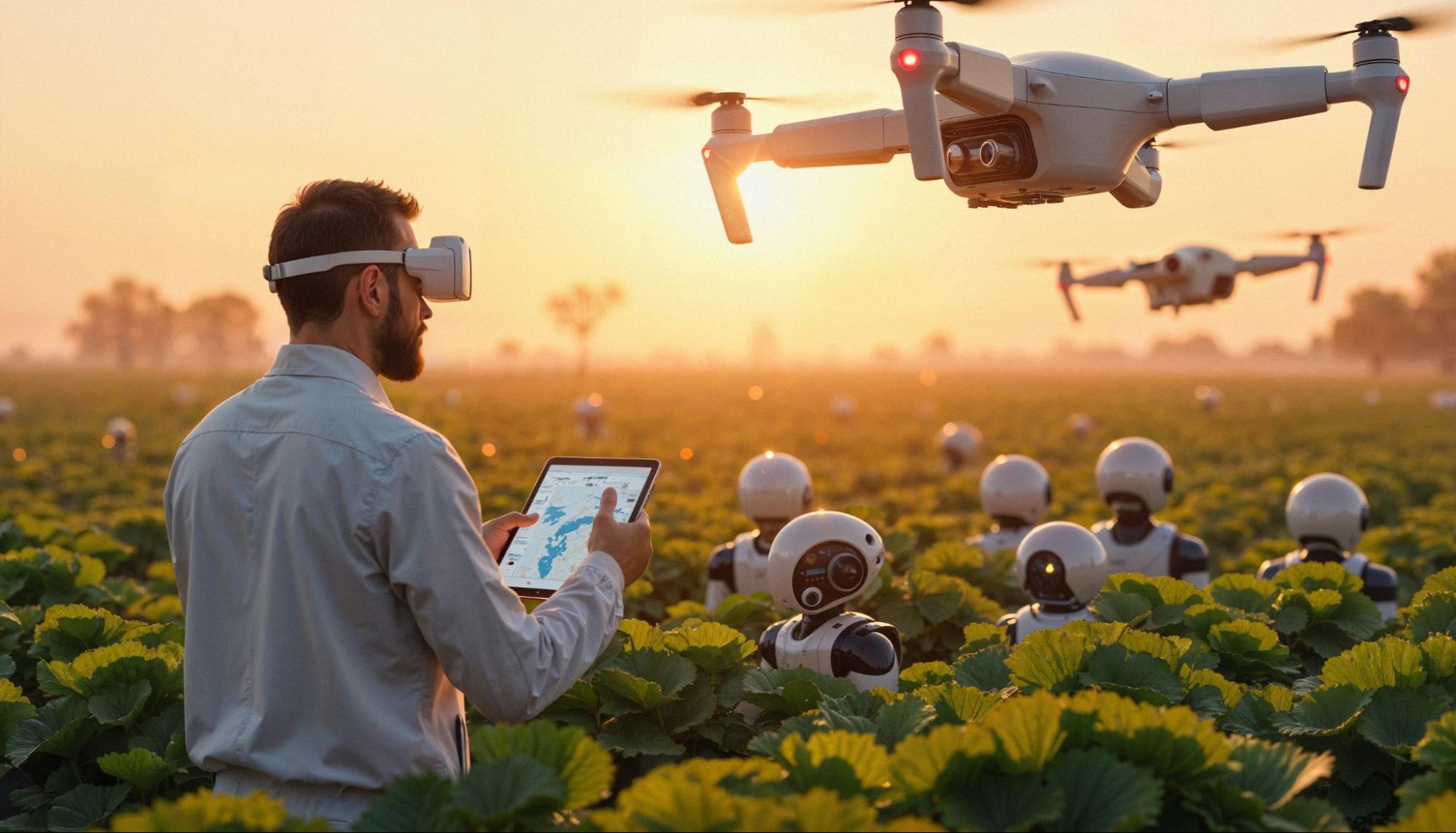
The agricultural landscape is undergoing a seismic shift, transitioning from traditional mechanical methods to a data-driven digital frontier. At the heart of this revolution is precision agriculture drones USA, a sector where the United States has established undisputed global leadership. By 2026, the integration of unmanned aerial vehicles (UAVs) has moved beyond experimental phases into a core component of enterprise-level farming operations.
From the rolling cornfields of the Midwest to the high-value vineyards of California, American growers are leveraging advanced aerial intelligence to solve complex challenges like labor shortages, resource scarcity, and climate variability. This blog explores why the U.S. remains the epicenter of innovation, regulatory maturity, and market growth in the agricultural drone space.
The Rapid Expansion of the US Agriculture Drone Market
The economic footprint of aerial technology in the American heartland is staggering. Recent financial forecasts indicate that the US agriculture drone market is experiencing a compound annual growth rate (CAGR) exceeding 24%, with valuations projected to reach into the billions by the end of the decade. This growth is not just about the number of "birds" in the sky; it represents a fundamental shift in how capital is allocated in modern agribusiness.
Large-scale commercial farms—those managing over 2,000 acres—are the primary drivers of this adoption. These enterprises utilize drones to achieve economies of scale that were previously impossible. By automating high-frequency tasks, U.S. farmers are reporting up to a 50% reduction in labor dependency and a significant boost in net profit margins. The market is no longer just selling hardware; it is selling "time" and "certainty" to the modern producer.
Strategic Advantages of Agricultural Drones United States
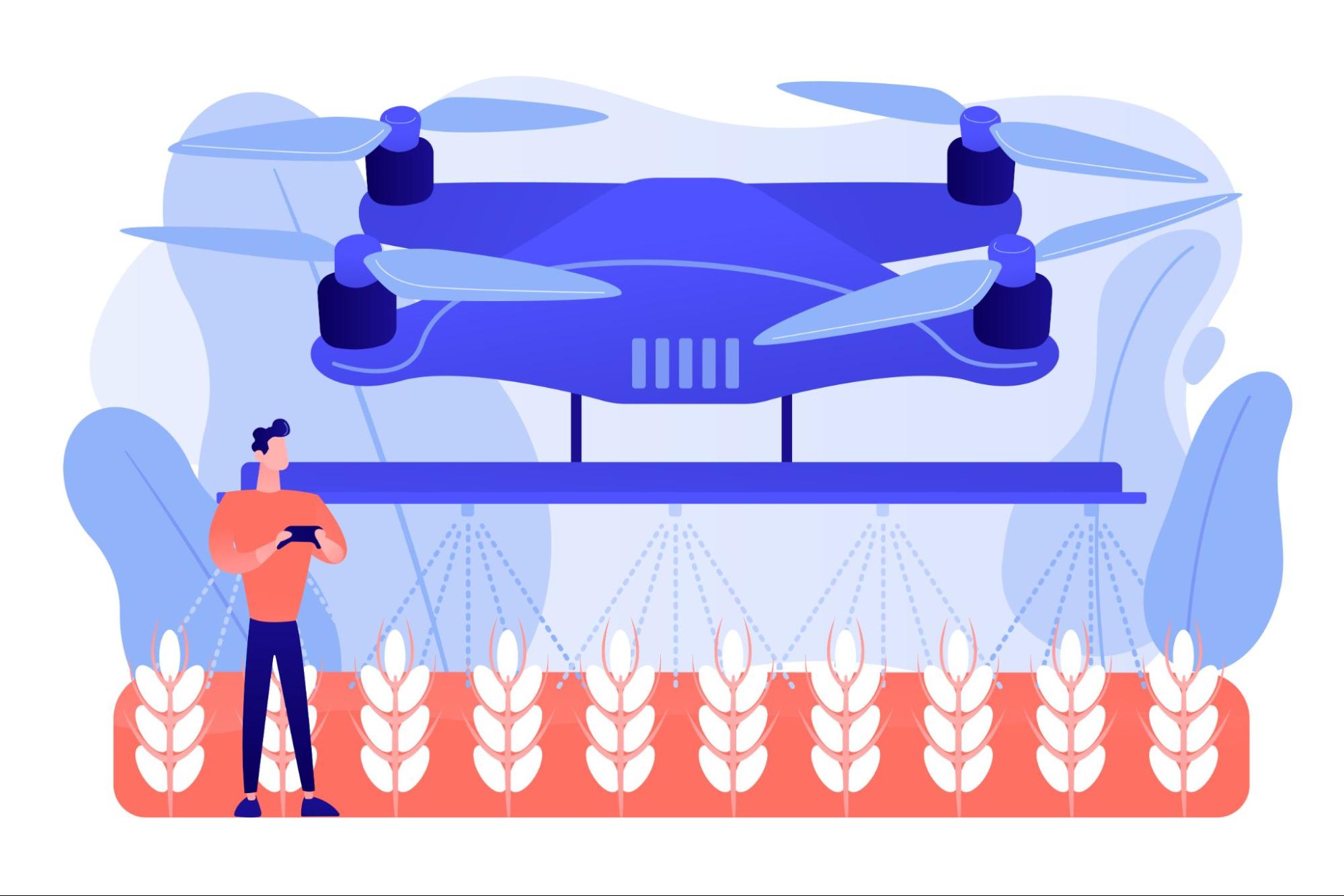
Why does the U.S. lead? The answer lies in the unique "innovation ecosystem" found within its borders. The agricultural drones United States sector benefits from a perfect storm of venture capital, elite research universities, and a vast, diverse geography that serves as a global testing ground.
American manufacturers like AgEagle, Skydio, and Hylio are designing platforms specifically for the rugged, high-output requirements of domestic farming. Unlike generic consumer models, these professional-grade systems are built for endurance and high-capacity payloads. This domestic manufacturing base ensures that growers have access to localized support, rapid hardware iterations, and data security—a critical factor in 2026 as global trade policies increasingly favor sovereign technology stacks.
Breaking Barriers with Drone Technology in US Agriculture
Technological convergence is the defining characteristic of drone technology in US agriculture today. We have moved past simple "eyes in the sky" to fully integrated robotic workers. Modern U.S.-made drones are now equipped with:
- Triple-redundancy GPS systems for centimeter-level accuracy.
- Modular "hot-swap" payloads that allow a single airframe to switch from multispectral mapping to liquid spraying in minutes.
- On-board obstacle avoidance that utilizes LiDAR to navigate complex terrain or high-tension power lines safely.
These advancements mean that drones can operate in environments once considered too risky or complex, providing a level of reliability that matches the heavy machinery John Deere and Case IH have provided for decades.
Maximizing ROI with Precision Farming Drones
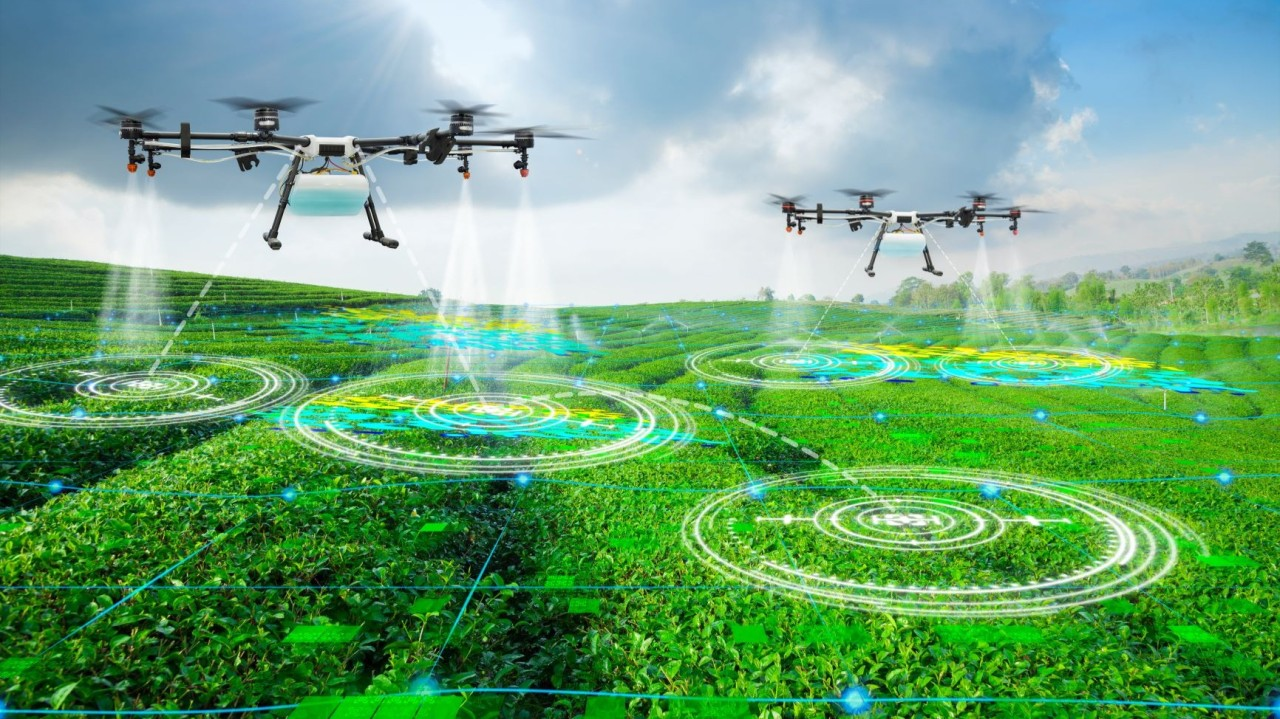
Efficiency is the name of the game, and precision farming drones are the ultimate tool for resource optimization. In the past, a farmer might treat an entire 500-acre field for a pest outbreak that was only present in a 10-acre corner.
Today, American drones use Variable Rate Application (VRA) to apply inputs—water, fertilizer, or pesticides—only where the data says they are needed. This "surgical" approach to farming typically results in:
- 30-45% reduction in chemical usage.
- Minimized environmental runoff, protecting local watersheds.
- Improved crop quality by preventing over-saturation or nutrient burn.
By turning "broadcast" farming into "targeted" farming, the ROI of a drone fleet is often realized within a single growing season.
Transforming Field Health with AI Drones for Agriculture USA
The true "intelligence" in the smart factory of the field comes from the "brain" of the drone. AI drones for agriculture in the USA are now capable of processing data "at the edge." Instead of waiting to upload thousands of images to a cloud server, these drones use onboard processors to identify plant stress, weed species, or insect infestations in real-time.
For example, a drone flying at 15 mph can identify a single weed in a row of soybeans and trigger a localized spray nozzle with millisecond precision. This level of automated decision-making removes the "guesswork" from farming, allowing managers to focus on high-level strategy while the AI handles the tactical execution.
Real-Time Insights from Crop Monitoring Drones USA
Monitoring is no longer a seasonal event; it is a continuous stream of data. Crop monitoring drones USA have replaced manual "crop scouting," where an agronomist would walk miles of rows to check for problems.
Modern fleets can be programmed to launch automatically from "drone-in-a-box" stations at dawn, scan hundreds of acres, and have a full Normalized Difference Vegetation Index (NDVI) report waiting in the farm manager's inbox before breakfast. These reports highlight "hot zones" of low chlorophyll or water stress, allowing teams to intervene days or weeks before the damage would be visible to the naked eye.
Operational Excellence through Farm Drone Technology United States
The hardware is only half the story. The success of farm drone technology in the United States is deeply rooted in its software integration. U.S. farms are increasingly using "Digital Twins"—virtual replicas of their land that are updated daily by drone flights.
This allows farmers to run simulations: "What happens if we increase nitrogen in Section B?" or "How will the drainage look after three inches of rain?" By testing these scenarios virtually, producers can avoid costly mistakes in the real world. This level of operational excellence is what separates global leaders from the rest of the pack.
Driving Efficiency via Drone-Based Precision Farming
The term drone-based precision farming encompasses a holistic workflow. It begins with soil analysis, continues through planting and growth monitoring, and ends with yield estimation.
In 2026, many U.S. operators are moving toward "multi-drone" coordination, where a "scout" drone identifies a problem area and automatically signals a "heavy-lift spray" drone to take off and treat the area. This seamless "detect and react" loop is the pinnacle of modern efficiency, reducing the time between problem identification and resolution from days to minutes.
The Growth of Managed Agricultural Drone Services USA
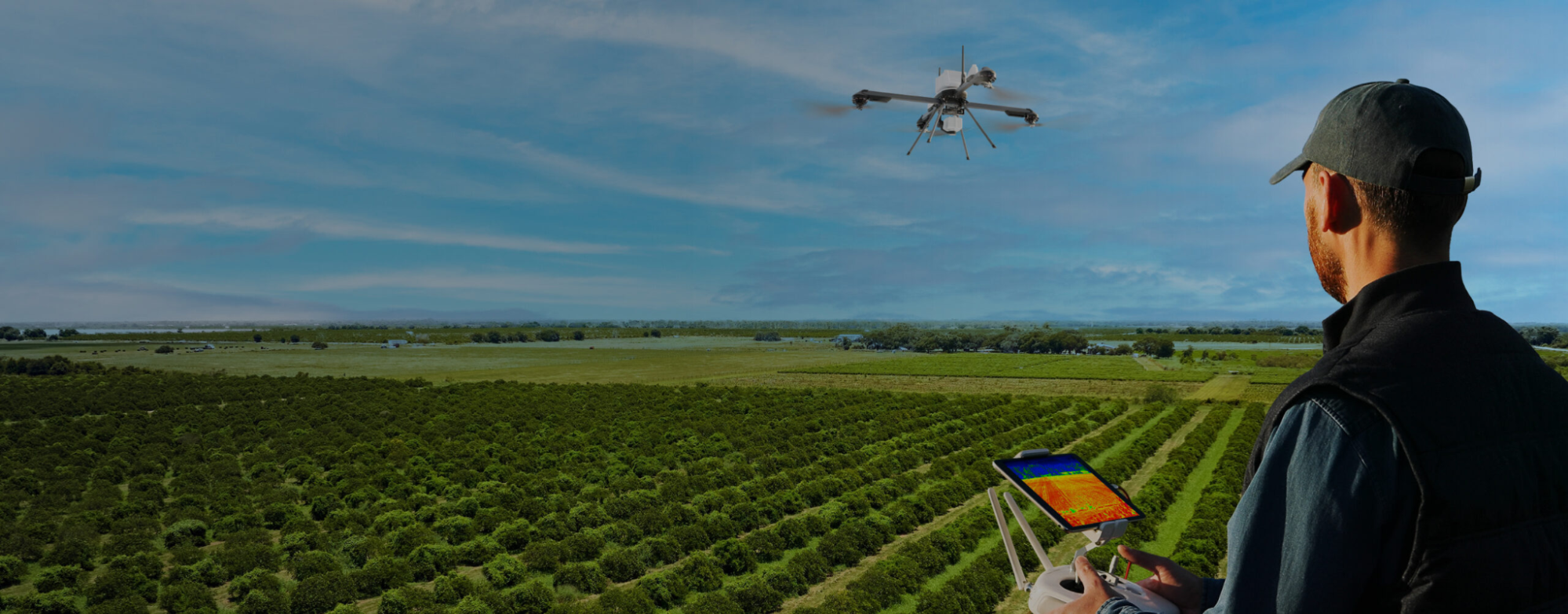
Not every farm wants to manage its own fleet or maintain a team of certified pilots. This has led to the explosion of agricultural drone services in the USA. These specialized providers offer "Drone-as-a-Service" (DaaS), bringing the latest technology to small and mid-sized farms on a contract basis.
These service providers are essential for complex tasks like:
- Large-scale aerial seeding for cover crops.
- Hyperspectral imaging for specialized nutrient mapping.
- Thermal auditing of irrigation systems to find leaks.
By outsourcing these tasks, smaller operations can access elite-level technology without the high upfront capital expenditure of purchasing their own hardware.
Sustainability and Smart Farming Drones USA
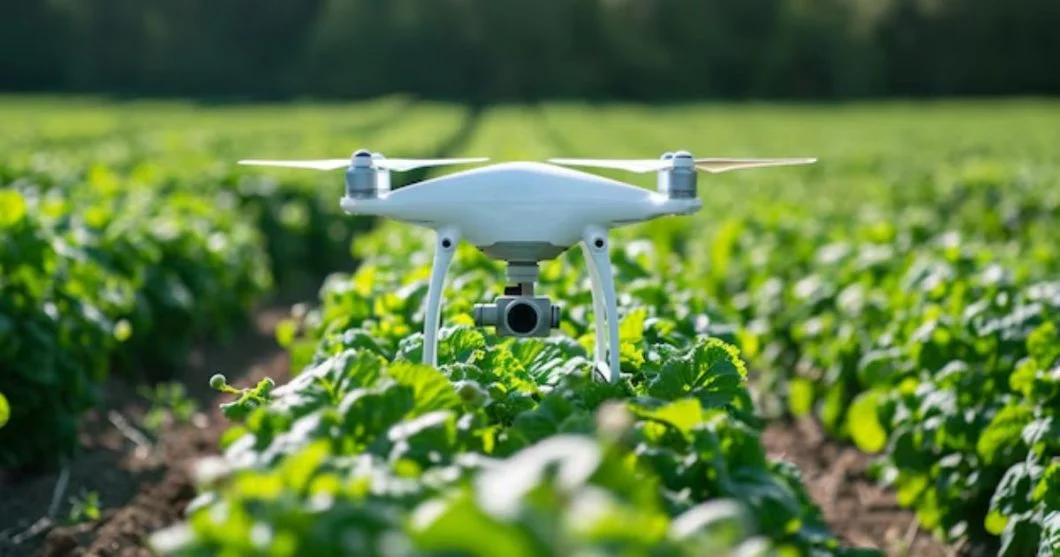
The push for "Green" agriculture is a major driver of smart farming drones in the USA. As global retailers and consumers demand more transparency regarding the environmental impact of food production, drones provide the necessary documentation.
Smart drones generate "audit trails" of every ounce of chemical applied and every gallon of water used. This data is increasingly used to secure "carbon credits" and sustainability certifications, which can open up new, higher-value markets for American farmers. Drones are proving that what is good for the planet is also good for the bottom line.
The Synergy of AI and IoT in US Agriculture
Drones do not operate in a vacuum; they are part of a wider "Internet of Trees" (and crops). The integration of AI and IoT in US agriculture creates a powerful feedback loop.
Sensors buried in the soil measure moisture and pH levels. When these sensors hit a certain threshold, they trigger a drone to fly a verification mission. The drone's AI then analyzes the visual data to confirm if a localized irrigation adjustment is needed. This interconnected ecosystem ensures that every resource is utilized to its maximum potential.
Accurate Harvest Planning with Yield Prediction Drones
One of the most valuable datasets for a large agribusiness is the "bottom line" before the harvest even starts. Yield prediction drones use high-resolution imagery and historical data models to estimate the final harvest volume with over 95% accuracy weeks in advance.
This allows for:
- Better logistics planning: Ordering the exact number of trucks and storage bins needed.
- Smarter marketing: Hedging grain prices based on confirmed on-farm inventory.
- Insurance accuracy: Providing clear proof of crop health for insurance adjustments or disaster claims.
Foundation for Growth: Soil Analysis Drones Agriculture
A successful crop starts beneath the surface. Soil analysis drones agriculture use specialized sensors like Ground Penetrating Radar (GPR) and microwave radiometers to map soil moisture, compaction, and nutrient density without disturbing the earth.
This allows for the creation of "Prescription Maps" that tell automated planters exactly how deep to place a seed and how much "starter" fertilizer to apply at that specific coordinate. By optimizing the "birth" of the crop, farmers ensure a much more uniform and healthy stand.
Navigating the FAA Drone Regulations Agriculture
The U.S. lead in this sector is also a result of a proactive regulatory environment. The FAA drone regulations have evolved to support commercial scale. In 2026, the introduction of "Part 108" streamlined Beyond Visual Line of Sight (BVLOS) operations.
This means a single pilot can now legally operate multiple drones miles away from their location, provided they have the proper safety systems in place. This regulatory clarity provides the legal "green light" that enterprises need to invest millions into drone infrastructure with confidence.
Safety Standards for Drone Spraying Regulations USA
Application of chemicals from the air is a high-stakes task. The drone spraying regulations USA (governed by FAA Part 137 and state-level pesticide boards) ensure that this technology is used safely.
Operators must undergo rigorous certification to ensure they understand drift management, chemical handling, and airspace safety. The U.S. has some of the highest safety standards in the world, which has ironically fostered more innovation as companies compete to build the safest, most precise application systems on the market.
Scaling Up with Commercial Agriculture Drones USA
The shift toward commercial agriculture drones USA has seen a move away from small "hobbyist" drones toward massive, industrial platforms. Some of the latest "heavy-lift" spray drones in the U.S. have takeoff weights exceeding 200 lbs and can cover 40 acres in a single hour.
These machines are built for 24/7 operation, featuring weatherized shells and rapid-charging battery stations. For a global enterprise, these aren't just gadgets—they are essential fleet assets that must perform with the same reliability as a fleet of semi-trucks.
Vision 2030: Future of Farming Drones USA
Looking ahead, the future of farming drones in the USA points toward total autonomy. We are moving toward "Swarm Intelligence," where groups of 5-10 drones work together like a hive to map and treat a field in a fraction of the time it takes today.
We also expect to see "Alternative Power" sources, such as hydrogen-cell drones that can fly for 8 hours without landing, allowing them to monitor massive ranches or forestry operations in a single sortie. The line between "drone" and "robot" will continue to blur until the farm is a fully automated, self-healing ecosystem.
Investing in Precision Agriculture Technology USA
For decision-makers, the message is clear: precision agriculture technology USA is no longer a luxury—it is a competitive necessity. The ability to see more, know more, and do more with fewer resources is the only way to remain profitable in a volatile global market.
Adopting this technology requires a strategic partner who understands both the "Silicon" (the tech) and the "Soil" (the farm). Companies that bridge this gap are the ones that will lead the next century of food production.
The Road Ahead for US Farming Drone Innovations
As we wrap up this deep dive, it’s evident that US farming drone innovations are setting the pace for the rest of the world. By combining AI, IoT, and heavy-duty robotics, the United States is not just farming "better"—it is redefining what is possible in land management.
The drones of today are the harbingers of a future where food security is managed with digital precision, ensuring a stable and sustainable supply for a growing global population.
Conclusion
The United States leads in precision agriculture drone technology because it has mastered the integration of data, hardware, and policy. For the modern producer, the question is no longer "should we use drones?" but "how fast can we scale our drone operations?"
Ready to modernize your production and lead the charge in agricultural innovation? [Talk to CQLsys today] to learn how our AI-driven automation and smart factory solutions can transform your enterprise-scale operations.