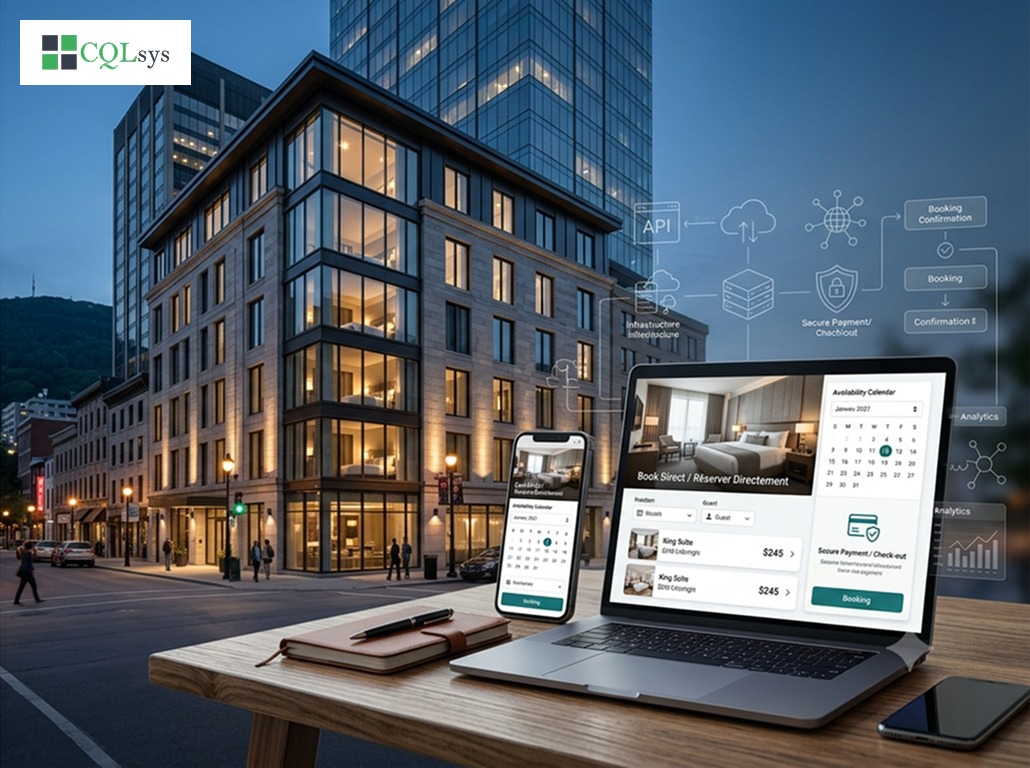
Web Development for Hospitality Businesses in Montreal: Building High-Converting Booking Platforms
Introduction
Montreal's hospitality industry faces a defining moment. With tourism rebounding and competition intensifying across Quebec's largest city, hotels, bed and breakfasts, and boutique accommodations are discovering that their digital presence directly determines their bottom line. Web development for hospitality businesses has evolved far beyond simple brochure websites. Today's hospitality brands need sophisticated, conversion-optimized booking platforms that capture direct reservations, reduce OTA dependency, and deliver exceptional guest experiences from first click to checkout.
The Montreal hospitality market presents unique opportunities and challenges. As one of North America's most vibrant cultural destinations, the city attracts millions of visitors annually for events like the Just for Laughs festival, the Montreal Jazz Festival, and year-round tourism. Yet the local hospitality landscape is fragmented—ranging from luxury hotels to intimate inns—each with different technology needs and guest expectations. Custom booking platform development tailored to Montreal's diverse hospitality sector can transform how properties attract, convert, and retain guests.
This comprehensive guide explores how modern web development empowers Montreal hospitality businesses to build high-converting booking platforms. From understanding guest behavior to implementing robust technology architecture, we'll examine the strategies, technologies, and implementation approaches that drive measurable business results. Whether you operate a small inn in Old Montreal or manage a large hotel chain across the city, the insights here will help you make informed decisions about your digital transformation journey.
Why Montreal Hospitality Businesses Need Modern Web Development
The hospitality industry in Montreal is undergoing rapid digital transformation. Guest expectations have shifted dramatically, with travelers now demanding seamless online experiences that rival the best e-commerce platforms. A property's website is no longer just a marketing tool—it's a revenue-generating asset that directly impacts occupancy rates and average daily rates.
The Competitive Landscape
Montreal's hospitality sector faces intense competition from major chains, boutique properties, and short-term rental platforms. To stand out, properties must offer more than just attractive rooms. They need intuitive, fast, and feature-rich booking experiences that meet modern traveler expectations. Properties with outdated websites lose potential guests to competitors with better digital experiences.
The Cost of Inefficient Booking Systems
Many Montreal hospitality businesses still rely on basic booking systems that frustrate users and leak revenue. Hidden fees, confusing navigation, slow load times, and mobile-unfriendly interfaces cause potential guests to abandon reservations and book elsewhere. For properties paying substantial commissions to OTAs like Booking.com and Expedia, inefficient direct booking platforms represent a significant revenue loss opportunity.
Why Montreal Specifically
Montreal's unique position as a bilingual, international destination creates specific web development requirements. Websites must accommodate both French and English speakers, integrate with local payment systems, and address seasonal fluctuations in tourism demand. Additionally, Montreal's tech-savvy population expects modern, mobile-first digital experiences from hospitality brands.
Key Features of High-Converting Hospitality Booking Platforms
Creating a booking platform that consistently converts visitors into paying guests requires careful attention to specific features and user experience elements. The following components are essential for successful conversion-optimized booking engine development.
1. Streamlined User Experience
The path from landing page to reservation confirmation must be frictionless. This means:
- Clear, prominent call-to-action buttons
- Minimal form fields
- Visual progress indicators
- Guest-friendly cancellation policies displayed clearly
- Real-time availability updates
2. Mobile-First Design
More than 60% of hotel bookings now originate from mobile devices. A hospitality mobile booking experience that works flawlessly on smartphones and tablets is non-negotiable. This includes touch-friendly interfaces, simplified forms, and mobile payment integration.
3. Dynamic Pricing and Promotions
Modern booking platforms should support dynamic pricing strategies, allowing properties to adjust rates based on demand, seasonality, and occupancy levels. Integration with hotel revenue management systems enables automated price optimization.
4. Guest Personalization
Today's travelers expect personalized experiences. A personalized guest booking experience includes displaying room options based on previous stays, offering customized packages, and remembering guest preferences.
5. Integrated Payment Processing
Secure, seamless payment processing builds trust and reduces checkout friction. Platforms should support multiple payment methods, including credit cards, digital wallets, and installment options popular in Quebec.
6. Social Proof Integration
Including reviews, ratings, and testimonials strategically throughout the booking journey builds confidence. Integration with review platforms and social media validates guest decisions.
7. Abandoned Booking Recovery
Sophisticated platforms capture user information during the booking process and automatically follow up with potential guests who abandon their reservations. This feature alone can recover 15-20% of lost bookings.
Technology Architecture for Hospitality Booking Platforms
Building a robust, scalable booking platform requires thoughtful architecture that balances performance, security, and business requirements. Below is a high-level architecture flow for a modern hospitality booking system.
High-Level Solution Architecture
Guest → Web/Mobile Application → CDN/Security Layer → API Gateway → Application Services Layer → Hotel PMS → Payment Gateway → Data Layer → Analytics & Reporting
Architecture Components Explained
User & Experience Layer
The user layer encompasses all guest-facing interfaces—web browsers, mobile applications, and potentially kiosks or tablet-based check-in systems. This layer captures user interactions, manages session state, and delivers the visual experience across devices. Montreal's bilingual audience requires robust localization capabilities within the presentation layer.
Security Layer
This critical layer protects sensitive guest information and financial data. Components include Content Delivery Networks (CDN) for performance optimization, Web Application Firewalls (WAF) for threat protection, and comprehensive authentication and authorization controls. Compliance with PCI-DSS standards for payment processing and GDPR for guest data privacy are fundamental requirements.
API & Integration Layer
The API gateway serves as the central entry point for all application requests, routing them to appropriate services. RESTful APIs enable communication between the booking platform and external systems, including property management systems (PMS), channel managers, and payment providers. This layer also manages rate limiting, authentication, and request transformation.
Application Services Layer
This is where business logic executes. Key services include:
- Room availability and inventory management
- Dynamic pricing engine
- Guest profile and preference management
- Booking and reservation workflow
- Notification services (email, SMS, push)
- Promotions and loyalty management
Integration Layer
Modern hospitality platforms must integrate with numerous external systems. This includes connection to Property Management Systems (PMS) for room and rate synchronization, Channel Managers for OTA integration, payment gateways for transaction processing, and Customer Relationship Management (CRM) platforms for guest engagement.
Data Layer
All platform data—guest information, booking records, room inventories, payment transactions, and analytics data—must be stored securely and efficiently. A combination of relational databases for transactional data and data warehouses for analytics typically supports the platform.
Architecture Technology Stack
| Architecture Component | Purpose | Suitable Technology |
|---|---|---|
| Frontend Application | User experience and interface | React / Next.js |
| Mobile Application | Mobile guest experience | React Native / Flutter |
| API Gateway | Request routing and security | Kong / AWS API Gateway |
| Backend Services | Business logic and workflows | Node.js / Python / .NET |
| Database | Transactional data management | PostgreSQL / MySQL |
| Cache Layer | Performance optimization | Redis / ElastiCache |
| Search Engine | Room availability and content | Elasticsearch |
| Payment Processing | Transaction handling | Stripe / Adyen / Moneris |
| Cloud Infrastructure | Hosting and scaling | AWS / Azure / Google Cloud |
| CDN | Content delivery and security | Cloudflare / AWS CloudFront |
Implementation Strategy for Montreal Hospitality Businesses
Successfully launching a high-converting booking platform requires careful planning and execution. Here's a practical roadmap for Montreal hospitality businesses.
Phase 1 — Discovery and Requirements
Begin by thoroughly understanding your business needs, target guest personas, and existing technology landscape. This phase includes stakeholder interviews, process mapping, competitor analysis, and defining success metrics. Consider how Montreal's unique tourism patterns—including festival seasons, business travel periods, and winter tourism—will influence platform requirements.
Phase 2 — System and Data Assessment
Evaluate current booking systems, property management software, channel management tools, and data quality. Identify integration points and data migration requirements. This phase also involves reviewing security posture and compliance with Quebec's privacy regulations.
Phase 3 — Solution Design
Develop detailed architecture specifications, user experience designs, and technical requirements. This includes defining the user journey, creating wireframes and prototypes, and establishing integration patterns with existing hotel systems. Prioritize features based on business impact and implementation complexity.
Phase 4 — Development and Integration
Building the custom booking platform includes frontend development, backend service creation, API development, and integration with property management systems, payment gateways, and other external services. An Agile development approach allows for iterative progress and early user testing.
Phase 5 — Testing and Quality Assurance
Comprehensive testing ensures platform reliability and security. This includes functional testing, performance testing, security testing, and user acceptance testing. Test with real users to validate the booking experience and identify friction points.
Phase 6 — Deployment and Launch
Deploy the platform in a controlled manner, starting with a soft launch or pilot phase. Monitor performance closely and be prepared to address issues promptly. Train staff on the new system and prepare guest communication about the enhanced booking experience.
Phase 7 — Optimization and Continuous Improvement
After launch, continuously monitor booking metrics, user behavior, and system performance. Use analytics to identify opportunities for improvement. A/B test different user flows, promotions, and features to optimize conversion rates over time.
Cost and ROI Considerations
Development Cost Factors
Project Complexity
The complexity of your booking platform significantly affects development costs. A basic system with standard features costs less than a sophisticated platform with AI-driven personalization, multi-property management, and extensive third-party integrations.
Technology Choices
Using modern, scalable technology stacks may require higher upfront investment but offers better long-term maintainability and performance. Open-source technologies can reduce licensing costs while commercial solutions may offer faster implementation.
Integration Requirements
Integrating with existing property management systems, channel managers, and payment providers can be complex and increase development costs. The availability of API documentation and existing integration patterns affects implementation effort.
Team Structure
Development costs vary based on whether you work with a local Montreal agency, a distributed team, or in-house developers. Consider not just hourly rates but also the expertise level and project management capabilities of the development team.
Expected ROI
Direct Booking Revenue Increase
A well-designed booking platform typically increases direct bookings by 20-40%. For a Montreal hotel with $5 million in annual revenue, this could represent $1-2 million in additional direct revenue.
OTA Commission Savings
Reducing OTA dependency from 40% to 20% of bookings can save significant commissions. At typical OTA rates of 15-20%, a property generating $3 million annually could save $300,000-600,000 in commissions.
Average Daily Rate Optimization
Dynamic pricing and targeted promotions can increase average daily rates by 5-15% without sacrificing occupancy. This improvement directly impacts revenue per available room.
Guest Lifetime Value
Enhanced guest experiences and personalization increase repeat bookings. Loyal guests who book direct have significantly higher lifetime value than OTA-acquired guests.
Security and Compliance Requirements
Data Protection and Privacy
Hospitality booking platforms handle sensitive guest information requiring robust security measures. The Quebec privacy landscape includes specific requirements under Quebec's Act respecting the protection of personal information in the private sector, which aligns with Canada's broader privacy frameworks.
Secure Data Handling
All guest personal information, payment details, and travel preferences must be encrypted both in transit and at rest. Access controls should follow the principle of least privilege, ensuring only authorized staff can access sensitive data.
PCI-DSS Compliance
Payment card data processing requires adherence to Payment Card Industry Data Security Standards. This includes regular security scanning, vulnerability management, and strict access controls for cardholder data environments.
Guest Consent Management
Montreal hospitality platforms must manage consent for data collection and usage appropriately. Clear disclosure about how guest information will be used, including for marketing purposes, is mandatory. Guests should have the ability to access, correct, or delete their personal information.
Authentication and Authorization
Implementing strong authentication mechanisms protects against unauthorized access. Consider multi-factor authentication for staff access, secure password policies, and role-based access control throughout the platform. Guest authentication may include social login options, email verification, and secure session management.
Data Backup and Disaster Recovery
A comprehensive disaster recovery plan ensures business continuity. Regular automated backups of booking data, guest information, and configuration settings should be stored in geographically diverse locations. Recovery time objectives and recovery point objectives should be defined based on business requirements.
Responsible AI Implementation
If the platform incorporates AI features such as personalization, dynamic pricing, or chatbots, ensure transparent and ethical implementation. AI systems should be explainable, and guests should be informed about how AI affects their booking experience. Regular audits of AI systems for fairness and bias are recommended.
Real-World Use Cases
Boutique Hotel Increasing Direct Bookings
A 30-room boutique hotel in Montreal's Plateau neighborhood was generating only 30% of its bookings through its direct website. After implementing a custom booking platform with enhanced user experience, mobile optimization, and abandoned booking recovery, direct bookings increased to 58% within six months. The hotel reduced OTA commissions by $120,000 annually while maintaining occupancy rates above 85%.
Multi-Property Group Centralizing Bookings
A Montreal hospitality group operating three distinct properties implemented a unified booking platform with centralized management. The platform enabled cross-selling between properties, unified guest profiles, and shared loyalty programs. The group reported a 25% increase in repeat bookings and a 15% improvement in average daily rates across properties.
Inn Leveraging Seasonal Promotions
A Montreal inn specializing in event-related tourism implemented dynamic pricing features on their booking platform. By automatically adjusting rates based on city-wide event schedules and occupancy levels, they optimized revenue during peak periods while remaining competitive during slower seasons. Revenue per available room increased by 22% year-over-year.
Why Choose CQLsys Technologies?
CQLsys Technologies brings deep expertise in developing custom web solutions for the hospitality industry. With a proven track record of delivering high-converting booking platforms, we understand the unique challenges facing Montreal's hospitality sector.
Custom Software Development for Hospitality
Our team designs and builds booking platforms specifically tailored to your property's needs. From boutique inns to large hotel groups, we create solutions that align with your business model, guest demographics, and operational requirements.
AI and ML Capabilities
We incorporate intelligent features such as dynamic pricing optimization, guest personalization, and predictive analytics to maximize your platform's revenue potential. Our AI solutions help you understand guest behavior and make data-driven decisions.
Enterprise Integration Expertise
We specialize in integrating booking platforms with existing hotel systems, including property management systems, channel managers, and CRM platforms. Our integration approach minimizes disruption while maximizing functionality.
User Experience Excellence
Our design-focused approach ensures your booking platform delivers exceptional user experiences that convert visitors into guests. We prioritize mobile-first design, intuitive navigation, and frictionless checkout processes.
Local Montreal Presence
As a Montreal-based technology partner, we understand the local hospitality landscape, regulatory environment, and market expectations. Our bilingual team delivers solutions that resonate with both domestic and international guests.
Comprehensive Support
From initial discovery through deployment and ongoing optimization, we provide end-to-end support. Our team remains available for maintenance, enhancements, and performance monitoring to ensure your platform continues delivering business value.
Frequently Asked Questions
1. What is hotel booking platform development?
Hotel booking platform development involves creating custom web-based and mobile applications that allow guests to search for rooms, check availability, view rates, and complete reservations. These platforms are specifically designed to meet hospitality business requirements and include features like inventory management, pricing flexibility, integration with hotel systems, and guest relationship management tools.
2. How much does hotel website development cost in Montreal?
Hotel website and booking platform costs in Montreal typically range from $50,000 to $250,000 depending on complexity, features, and integrations. Basic brochure websites with limited booking functionality cost less, while sophisticated platforms with PMS integration, dynamic pricing, and AI features require higher investment. Factors like team expertise, technology choices, and project timeline influence final costs.
3. What features should a hotel booking system have?
Essential features include real-time availability and rates, secure payment processing, mobile optimization, guest profiles and preferences, promotional and package management, multi-language support, calendar integration, and analytics dashboards. Advanced systems offer dynamic pricing, abandoned booking recovery, review management, and integration with property management and channel management systems.
4. How to improve direct hotel bookings through website?
Improve direct bookings by optimizing mobile experience, simplifying the booking process, displaying rates competitively with OTAs, adding social proof through guest reviews, creating exclusive direct-booking offers, implementing abandoned booking recovery, using retargeting strategies, and ensuring fast page load times. Personalization based on previous guest behavior also increases conversion rates.
5. Which technology is best for hotel booking platforms?
Modern hotel booking platforms typically use React or Next.js for frontend development and Node.js, Python, or .NET for backend services. PostgreSQL or MySQL are common database choices. Cloud platforms like AWS or Azure provide scalable infrastructure. The specific stack depends on your requirements, team expertise, and integration needs.
6. How long does hotel booking platform development take?
The timeline for custom hotel booking platform development typically ranges from 4 to 12 months. Simple projects with minimal integrations may take 3-4 months, while complex platforms with extensive integrations, AI features, and advanced customizations require 9-12 months. Factors like requirements definition, team size, testing requirements, and stakeholder feedback cycles affect the duration.
7. Why is Montreal a good market for hospitality tech?
Montreal offers a robust hospitality market with diverse property types, strong tourism demand, and a tech-savvy population. The city's bilingual character creates opportunities for innovative platforms serving French and English speakers. Montreal's growing technology sector provides access to development talent and partnerships, while the competitive accommodation market creates pressure for digital innovation.
8. What is the ROI of a custom hotel booking system?
Custom hotel booking systems typically deliver ROI through increased direct bookings, reduced OTA commissions, higher average daily rates, and improved guest retention. Most properties see 20-40% increases in direct bookings within six to twelve months of implementation. For a property with significant OTA dependency, commission savings alone can generate six-figure annual returns.
9. How does hotel PMS integration work?
PMS integration synchronizes room inventory, rates, guest profiles, and booking data between your website and your property management system. This typically uses REST APIs to ensure real-time data exchange. When a guest books through your website, the reservation automatically appears in your PMS, and availability updates accordingly. This eliminates manual data entry and reduces errors.
10. What security standards apply to hotel booking websites?
Hotel booking websites must comply with PCI-DSS for payment processing, adhere to Quebec privacy regulations, and follow data protection best practices including end-to-end encryption, secure authentication, regular security testing, and vulnerability management. GDPR requirements apply for European guests. Strong security measures build guest trust and prevent costly data breaches.
Ready to Transform Your Hospitality Booking Experience?
Your Montreal hospitality business deserves a booking platform that drives direct revenue, enhances guest experiences, and reduces dependence on third-party channels. CQLsys Technologies specializes in building custom web development solutions for hospitality businesses that deliver measurable results.
Contact us today to discuss how we can help you build a high-converting booking platform tailored to your property's unique needs, Montreal's vibrant market, and your guests' expectations.
Contact CQLsys Technologies for Your Custom Booking Platform Consultation