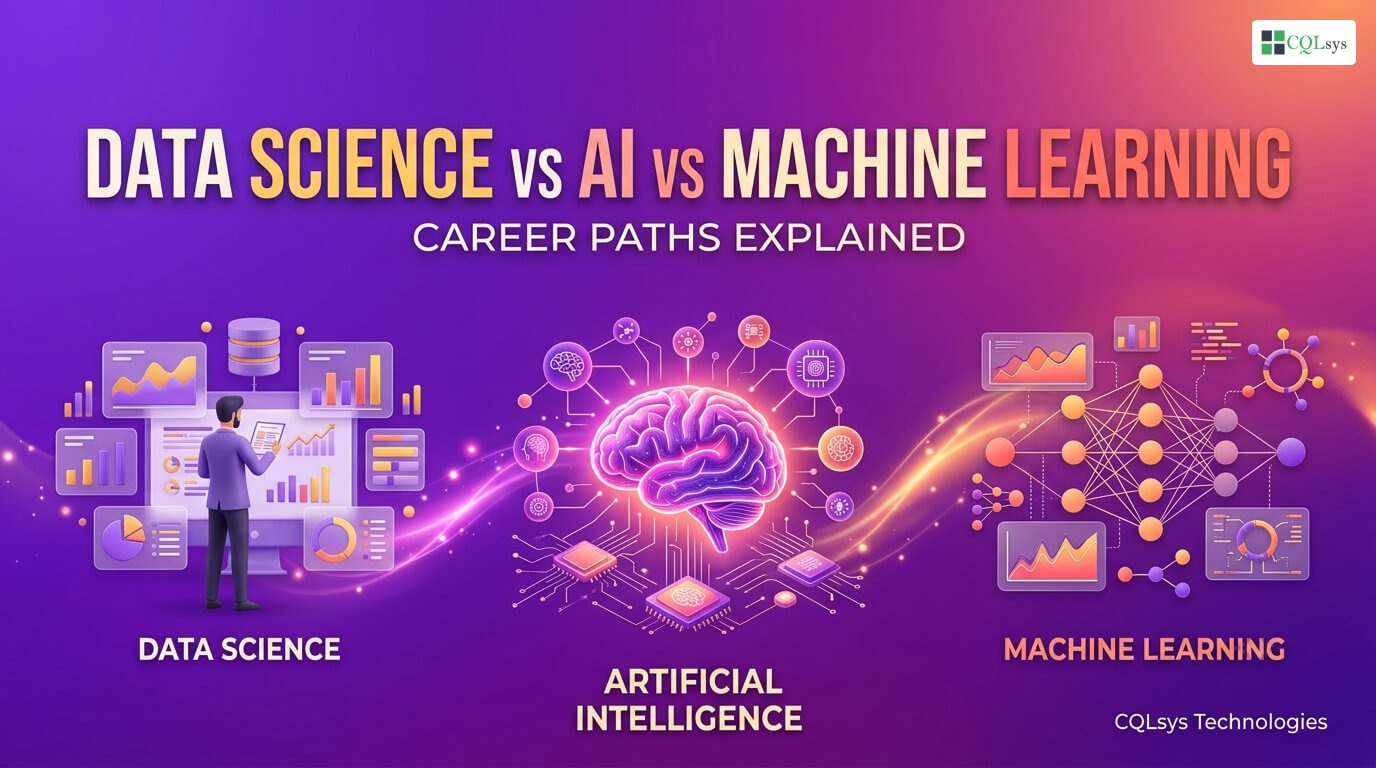
Data Science vs AI vs Machine Learning: Career Differences Explained
The modern technology ecosystem experiences rapid transformation driven by advanced analytics, automation, and intelligent systems. Organizations across global markets increasingly rely on complex data infrastructures to maintain a competitive advantage. Within this environment, professionals often debate the distinct boundaries between data science, artificial intelligence, and machine learning. Understanding these disciplines is essential for individuals planning professional development and for enterprises structuring high-performing technical teams. This article examines the core definitions, operational boundaries, and specialized career pathways associated with each domain, while evaluating professional training opportunities such as an AI course in Chandigarh for regional talent development.
Understanding the Core Disciplines
Defining the boundaries between data science, artificial intelligence, and machine learning requires examining their foundational objectives and operational methodologies. Each discipline serves a distinct function within the broader technology stack, influencing how enterprises process information and automate complex processes. Organizations seeking digital transformation must recognize these differences to deploy appropriate resources and talent.
The Scope of Artificial Intelligence
Artificial intelligence represents the overarching domain dedicated to creating systems capable of performing tasks that typically require human cognition. This broad field encompasses natural language processing, computer vision, robotics, and complex problem-solving architectures. Enterprise technology leaders utilize artificial intelligence to build autonomous applications that streamline business operations, enhance customer experiences, and automate repetitive workflows.
The Focus of Machine Learning
Machine learning functions as a core subset of artificial intelligence, focusing specifically on algorithms that allow systems to learn from data and improve performance over time without explicit programming. Rather than relying on rigid rule-based logic, machine learning models identify statistical patterns within large datasets. Practitioners in this field develop predictive models, classification systems, and recommendation engines that power modern software applications.
The Domain of Data Science
Data science operates as a multidisciplinary field combining statistics, mathematics, specialized programming, and domain expertise. While machine learning emphasizes predictive modeling and algorithm deployment, data science covers the entire data lifecycle. This includes data ingestion, cleaning, exploratory data analysis, statistical modeling, and data visualization. Data scientists extract actionable business insights from unstructured and structured information repositories, guiding strategic executive decision-making.
Core Competencies and Skill Requirements
Professional success within these technology sectors demands distinct sets of technical and analytical competencies. Practitioners must acquire specialized knowledge aligned with their chosen career trajectory.
- ● Statistical Analysis and Mathematics: Essential for data scientists and machine learning engineers to interpret complex datasets and evaluate model accuracy.
- ● Programming Proficiency: Mastery of languages such as Python and R enables practitioners to construct data pipelines and train sophisticated algorithms.
- ● Data Engineering Fundamentals: Understanding database architectures, cloud storage solutions, and data governance ensures reliable information processing.
- ● Model Deployment and Monitoring: Crucial for transitioning experimental models into production environments within enterprise software systems.
Professionals aiming to acquire these competencies often evaluate structured educational programs, including a comprehensive artificial intelligence course in Chandigarh, to bridge the gap between theoretical knowledge and practical execution.
Enterprise Applications and Industry Impact
Modern enterprises integrate these technologies into diverse operational workflows to optimize performance and drive revenue growth. The practical implementation of these disciplines varies significantly across different market sectors.
Financial Services and FinTech
Financial institutions deploy machine learning models for real-time fraud detection, automated credit scoring, and algorithmic trading. Simultaneously, data scientists analyze transactional histories to identify emerging market trends and customer behavior patterns, ensuring robust risk management.
Healthcare and Life Sciences
Healthcare providers utilize artificial intelligence systems to assist in medical imaging analysis, patient diagnosis predictions, and personalized treatment planning. Data science methodologies manage vast electronic health record repositories, improving operational efficiency and clinical outcomes.
Retail and E-commerce
Retail enterprises implement recommendation engines powered by machine learning to deliver personalized shopping experiences. Inventory management systems leverage predictive analytics to forecast demand fluctuations and optimize supply chain logistics.
Solution Architecture and Technical Integration
Deploying data science models and artificial intelligence systems within enterprise environments requires a robust technical architecture. Organizations must design scalable infrastructure to support heavy computational workloads, continuous data ingestion, and secure API integration.
Data Sources → Ingestion Layer → Data Pipeline & Storage → Processing & ML Engine → Application & API Layer → Enterprise Dashboards
Ingestion and Data Pipeline Layer
The architecture begins with data ingestion from multiple internal and external sources. Enterprise systems collect transactional records, user telemetry, and external API feeds, routing them through secure channels into centralized data lakes or warehouses.
Processing and Machine Learning Engine
Within this central tier, algorithms execute data transformation, feature engineering, and model training. Scalable cloud infrastructure provides the necessary computing power, utilizing distributed processing frameworks to handle large datasets efficiently.
Application and API Layer
Trained models and analytical insights integrate into consumer-facing applications or internal enterprise dashboards through secure RESTful APIs. This ensures seamless communication between the analytical core and the end-user experience layer.
Technology Stack and Infrastructure
Selecting an appropriate technology stack is critical for successful implementation. Organizations and training institutes, including those offering a specialized AI training in Chandigarh, emphasize industry-standard tools and frameworks.
| Technology Category | Primary Tools & Frameworks | Enterprise Purpose |
|---|---|---|
| Programming Languages | Python, R, SQL | Core algorithm development and data manipulation |
| Machine Learning Frameworks | Scikit-Learn, TensorFlow, PyTorch | Model construction, training, and neural network design |
| Data Processing | Pandas, NumPy, Apache Spark | Large-scale data cleaning and numerical computation |
| Cloud Infrastructure | AWS, Microsoft Azure, Google Cloud Platform | Scalable computing, storage, and model deployment |
| Database Management | PostgreSQL, MongoDB, Snowflake | Secure and efficient data persistence and retrieval |
Career Pathways and Opportunities
The career trajectory for professionals in data science, artificial intelligence, and machine learning offers diverse opportunities across global markets. Candidates can specialize in technical research, software engineering integration, or strategic business analytics.
- ● Data Scientist: Focuses on exploratory data analysis, statistical hypothesis testing, and translating complex data into strategic business insights.
- ● Machine Learning Engineer: Specializes in designing, building, and deploying scalable machine learning systems into production software environments.
- ● AI Solutions Architect: Oversees the integration of artificial intelligence components into enterprise-wide software architectures, ensuring security and scalability.
- ● Data Engineer: Builds and maintains the underlying infrastructure required for data generation, storage, and pipeline transmission.
Candidates seeking accelerated entry into these roles often pursue an industry-recognized artificial intelligence training in Chandigarh to gain hands-on project experience and technical mentorship.
Implementation Strategy for Enterprise Adoption
Organizations looking to adopt data-driven and intelligent systems must follow a structured implementation roadmap to mitigate risk and maximize return on investment.
- Discovery and Objective Alignment: Identify specific business challenges that can be resolved through data analytics or artificial intelligence integration.
- Data Assessment and Governance: Evaluate existing data repositories for quality, completeness, security, and compliance with regional regulations.
- Architecture Design: Define the technical infrastructure, select appropriate frameworks, and establish secure integration pathways.
- Prototype Development: Build initial models or analytical dashboards to validate feasibility and measure expected business impact.
- Production Deployment and Scaling: Integrate validated solutions into live enterprise environments, accompanied by continuous performance monitoring.
Why Choose CQLsys Technologies?
CQLsys Technologies delivers advanced software development and artificial intelligence solutions designed to meet complex enterprise requirements. Organizations partnering with CQLsys gain access to seasoned technical architects, dedicated engineering teams, and rigorous quality assurance protocols. Whether developing bespoke SaaS applications, integrating machine learning models, or executing comprehensive digital transformation strategies, CQLsys aligns technology implementation with measurable business objectives. To explore tailored solutions for your enterprise, visit our Software Development Services or connect directly with our technical consultants through our Contact Page. Additional insights into our engineering capabilities are available at CQLsys Technologies.
FAQs
What are the main career differences between data science and AI?
Data science primarily focuses on extracting actionable insights from data through statistical analysis, mathematics, and exploratory research. Artificial intelligence represents a broader domain aimed at creating autonomous systems that perform cognitive tasks. While data scientists analyze historical trends and build predictive models, AI specialists design intelligent applications capable of reasoning, natural language processing, and automated decision-making.
How do I choose between data science and machine learning roles?
Choosing between these roles depends on your affinity for mathematics, statistics, and software engineering. Data science suits professionals who enjoy uncovering business narratives within complex datasets and performing statistical evaluations. Machine learning focuses heavily on algorithm optimization, software engineering principles, and deploying predictive models into scalable production environments.
What qualifications are required for an artificial intelligence course in Chandigarh?
Most professional training programs require a foundational understanding of mathematics, basic programming knowledge in languages like Python, and analytical aptitude. Educational providers often welcome engineering graduates, IT professionals, and working executives seeking to upgrade their technical skill sets for modern enterprise environments.
Can working professionals transition into AI and data science careers?
Yes, many working professionals successfully transition into these fields by enrolling in specialized certification programs, professional training courses, and industrial bootcamps. Upskilling allows developers, analysts, and project managers to acquire practical experience with machine learning frameworks, data pipelines, and cloud computing architectures.
What is the typical duration of an AI and machine learning course?
Course durations vary depending on the depth of the curriculum, institutional format, and intensity. Comprehensive industrial training programs typically range from three to six months for intensive bootcamps, while executive professional courses may extend up to twelve months to accommodate working schedules while covering advanced topics.
How does Python impact machine learning and data science workflows?
Python serves as the primary programming language for data science and artificial intelligence due to its readable syntax, extensive library ecosystem, and strong community support. Libraries such as Pandas, NumPy, Scikit-Learn, TensorFlow, and PyTorch simplify data manipulation, statistical modeling, and neural network training for developers.
What job opportunities exist after completing an AI training program?
Graduates can pursue various professional roles, including machine learning engineer, data analyst, AI developer, business intelligence consultant, and data engineer. These positions exist across diverse sectors such as financial technology, healthcare, e-commerce, enterprise software, and digital marketing agencies.
Which industries offer the highest salaries for data science professionals?
Financial services, enterprise software development, healthcare technology, and e-commerce generally offer the highest compensation packages for data science and AI professionals. These industries manage vast data repositories and rely heavily on predictive analytics to maintain competitive market positioning.
Is a background in software engineering mandatory for machine learning careers?
While a formal background in software engineering is not strictly mandatory, it provides a significant advantage when deploying models into production environments. Machine learning engineers must understand software design patterns, API integration, and version control to collaborate effectively with development teams.
How do modern enterprises evaluate talent in AI, machine learning, and data science?
Enterprises evaluate talent through technical assessments, coding evaluations, portfolio reviews, and practical problem-solving interviews. Organizations look for candidates who demonstrate both theoretical comprehension of algorithms and the ability to apply technical knowledge to solve real-world business challenges.
Accelerate your organization's digital capabilities and technological innovation with expert guidance from CQLsys Technologies. Whether you require custom software engineering, advanced machine learning integration, or enterprise AI development, our senior consultants deliver scalable, results-driven solutions. Discuss your project requirements and strategic objectives with our engineering team by visiting our Contact Page today.