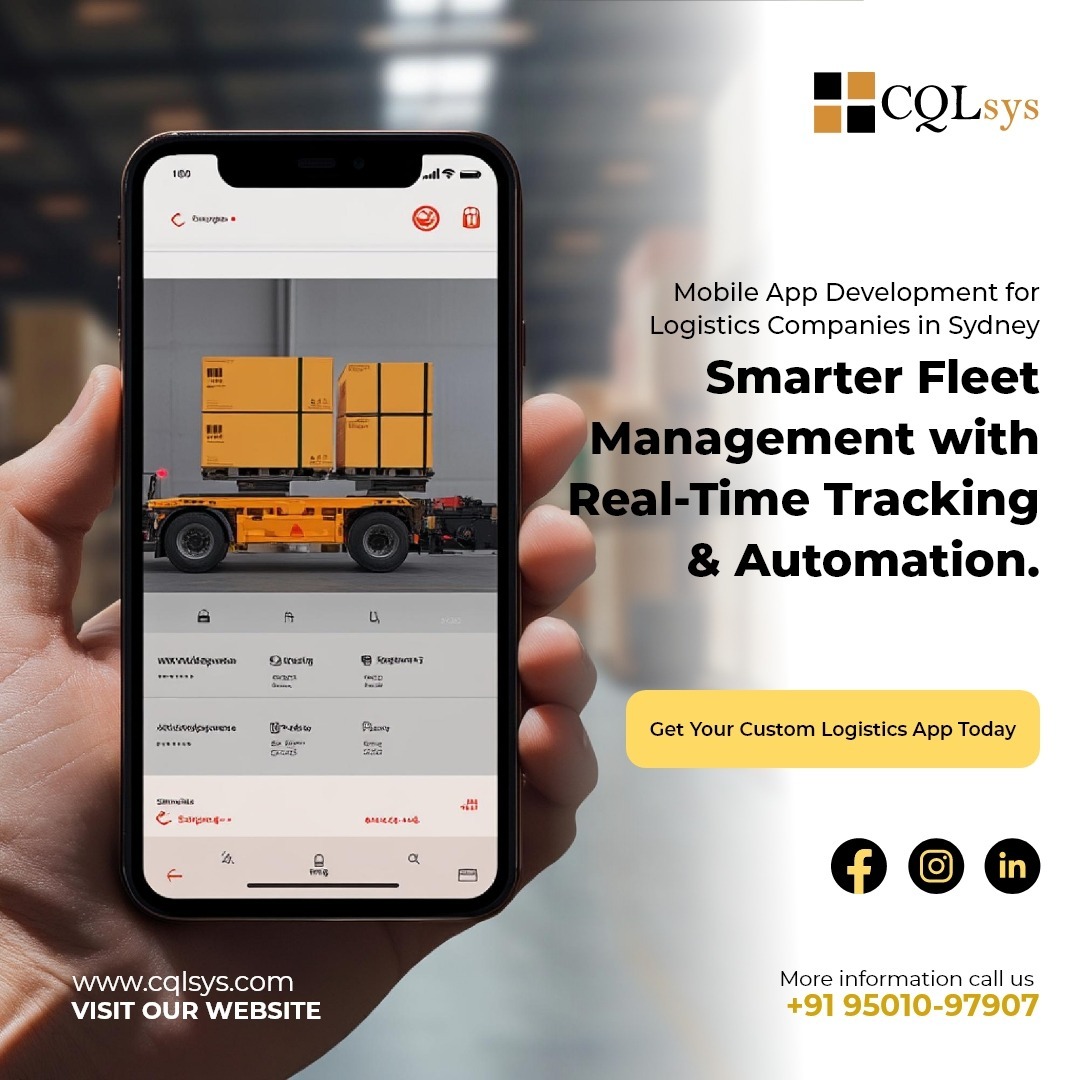
Mobile App Development for Logistics Companies in Sydney: Smarter Fleet Management in Real Time
Navigating transport networks across Greater Sydney presents complex operational hurdles. Freight operators face persistent choke points near Port Botany, dense urban congestion along the M4 and M7 corridors, shifting toll structures, and stringent National Heavy Vehicle Regulator (NHVR) safety mandates. Relying on manual whiteboards, legacy radio dispatches, or paper-based delivery dockets drains profit margins through wasted fuel, unexpected vehicle downtime, and missed delivery windows.
Custom Mobile App Development for Logistics Companies in Sydney bridges the gap between field operations and back-office management. By putting real-time telematics, intelligent route optimization, automated electronic proof of delivery (ePOD), and predictive driver safety tools into mobile devices, Sydney transport companies turn logistics gridlock into a streamlined competitive edge.
Discover how modern enterprise mobile applications redefine transport operations, lower fuel costs, and ensure compliance across Sydney and New South Wales. To see how bespoke mobile software elevates enterprise operations, explore CQLsys Technologies and review our proven track record in our client portfolio.
The Sydney Logistics Landscape: Unique Regional Challenges
Sydney functions as Australia's primary economic engine and maritime trade gateway. However, moving goods across the Sydney basin involves distinct local challenges that off-the-shelf software rarely handles well.
+-----------------------------------------------------------------------+
|                   SYDNEY LOGISTICS OPERATIONAL HUB                    |
+-----------------------------------------------------------------------+
|                                                                       |
v                                                                       v
+-----------------------+                       +-----------------------+
|  Port Botany Maritime |                       |  Western Sydney Hubs  |
|  & Intermodal Gates   |                       | (Moorebank, Chullora) |
+-----------------------+                       +-----------------------+
|                                                                       |
+-------------------+-------------------+
                    |
                    v
+-----------------------------------------------------------------------+
|            CUSTOM REAL-TIME MOBILE APP & TELEMATICS ENGINE            |
| (Dynamic Routing | Heavy Vehicle Maps | Driver Safety | Digital ePOD) |
+-----------------------------------------------------------------------+
1. Port Botany Container Bottlenecks
As New South Wales' busiest container port, Port Botany processes millions of TEUs annually. Container rail-slot delays, landside queueing, and strict turn-around windows mean uncoordinated trucks waste hours idling outside terminals, incurring heavy demurrage and detention fees.
2. Complex Urban Topography and Heavy Vehicle Tolls
Sydney's urban geography—marked by harbor crossings, narrow heritage roads in Alexandria, and restricted heavy-vehicle bridges—requires precise turn-by-turn navigation designed specifically for broad axles and high clearances. Standard consumer GPS tools frequently direct heavy riggers onto restricted roads, triggering fines and safety hazards.
3. Rapid Expansion in Western Sydney
The growth of the Moorebank Intermodal Precinct, Chullora freight hubs, and the Western Sydney Aerotropolis has shifted the center of distribution westward. Managing long-haul connectivity between Western Sydney distribution centers and eastern metropolitan drop-offs demands real-time dynamic rerouting to avoid freeway gridlock.
4. Strict NHVR Safety and Fatigue Mandates
Australia's Heavy Vehicle National Law (HVNL) enforces rigorous fatigue management, axle weight limits, and speed monitoring. Non-compliance leads to severe corporate liability, loss of transport licenses, and heavy financial penalties.
To solve these systemic bottlenecks, transport directors are partnering with specialized app engineers. Learn how our dedicated Mobile App Development services build resilient, heavy-vehicle-tailored mobile applications.
Core Technologies Powering Real-Time Fleet Apps
Modern fleet applications rely on connected hardware, cloud services, and machine learning to deliver operational visibility.
+--------------------------------------------------------------------+
|                         FLEET APP TECH STACK                       |
+-------------------+-------------------+----------------------------+
|  IoT Telematics   |  Edge GPS Engine  |   AI Dynamic Routing       |
|  Engine sensors,  | Sub-second driver | Live traffic, weather,     |
|  temperature tags | location tracking | and toll optimization      |
+-------------------+-------------------+----------------------------+
|  Cloud Backend    |  Enterprise APIs  |   Offline Database         |
|  Scalable AWS/GCP | SAP, Oracle, and  | SQLite & Realm local sync  |
|  microservices    | TMS connectors    | for remote transport zones |
+--------------------------------------------------------------------+
Internet of Things (IoT) & Telematics
By connecting vehicle On-Board Diagnostics (OBD-II) units and CAN-bus telemetry directly to a mobile interface via Bluetooth or cellular connections, fleet managers track engine health, fuel rates, tire pressure, and brake wear in real time. Check out our IoT solutions page to learn how hardware integrations transform transport visibility.
AI-Driven Route Optimization
Artificial Intelligence processes live Sydney traffic feeds, toll charges, road height restrictions, and weather patterns to calculate fuel-efficient routes. When an incident blocks the M4 or Botany Road, the mobile app automatically alerts the driver with an alternative route before delays build up. Read more on our Enterprise AI Consulting page regarding dynamic routing algorithms.
Cloud Microservices & Offline Synchronization
Sydney drivers frequently enter underground tunnels, loading docks, or regional NSW blackspots where cellular coverage drops. Custom mobile apps use local SQLite or Realm databases to store job signatures, barcode scans, and location markers offline, instantly syncing with central cloud servers once connectivity is restored.
Comparison: Traditional Fleet Operations vs. Modern Real-Time Mobile App
| Operational Area | Traditional / Legacy Fleet Approach | Real-Time Custom Mobile App Solution |
|---|---|---|
| Driver Dispatch | Manual phone calls, SMS strings, paper dockets | Automated push dispatch based on driver location & capacity |
| Route Guidance | Generic consumer GPS or driver memory | Heavy-vehicle specific routing with height/weight/toll awareness |
| Proof of Delivery | Physical paper dockets prone to loss & delay | Digital ePOD with glass signature, photo capture & timestamp |
| Fleet Visibility | Periodic manual check-in calls every few hours | Live sub-second GPS map tracking with automated ETA updates |
| Maintenance | Reactive repair after vehicle breakdowns | Predictive maintenance based on live CAN-bus diagnostic data |
| NHVR Compliance | Manual paper logbooks subject to error | Certified Electronic Work Diary (EWD) with automated fatigue alerts |
| Customer Support | Inbound call center handling delay complaints | Self-service live tracking links sent automatically to shippers |
12 Key Benefits of Real-Time Fleet Mobile App Development
Investing in custom mobile app development delivers measurable operational improvements across every tier of a Sydney logistics enterprise:
- Up to 25% Reduction in Fuel Costs: Intelligent route optimization avoids heavy traffic jams and minimizes unnecessary engine idling in urban zones.
- Instant Electronic Proof of Delivery (ePOD): Capture electronic signatures, photographic evidence of cargo condition, and precise geotags upon arrival, speeding up invoicing cycles.
- Enhanced NHVR & Fatigue Compliance: Integrated Electronic Work Diaries automatically track driver work hours and break schedules, keeping operations fully compliant with Australian transport laws.
- Sub-Second GPS Fleet Visibility: Monitor the exact locations of light commercial vehicles, heavy riggers, and specialized trailers across Greater Sydney.
- Reduced Vehicle Maintenance Downtime: Automated fault detection flags early engine warning codes before catastrophic mechanical failures occur.
- Faster Freight Turnaround at Port Botany: Dynamic queue management coordinates driver arrival times with terminal slot reservations to prevent long container gate waits.
- Improved Driver Retention & Safety: Clear, easy-to-use mobile interfaces reduce admin stress, while dangerous driving alerts (hard braking, speeding, sharp turns) keep drivers safer.
- Automated Customer Communications: Send automated SMS or email notifications with accurate estimated times of arrival (ETAs) to shippers and consignees.
- Elimination of Paper Dockets: Go 100% paperless, eliminating lost paperwork, manual data entry errors, and administrative clutter.
- Dynamic Order Re-Assignment: Dispatchers can assign urgent mid-route pickup requests to the closest available truck with spare cargo capacity.
- Cold Chain Integrity Assurance: Bluetooth temperature sensor integration generates immediate alerts if cargo bays drift outside safe refrigeration parameters.
- Data-Driven Capital Allocation: Clear analytics on asset utilization help fleet directors decide when to expand, retire, or reallocate transport assets.
Essential Features of an Enterprise Logistics Mobile App
A successful fleet mobile solution brings together two distinct interfaces: an easy-to-use mobile app for drivers and a powerful web dashboard for dispatchers.
+-------------------------------------------------------------------------+
|                  ENTERPRISE LOGISTICS SUITE ARCHITECTURE                |
+------------------------------------+------------------------------------+
| DRIVER MOBILE APP (iOS/Android)    | DISPATCHER CLOUD DASHBOARD         |
| * Biometric Quick Login            | * Live Fleet Map Overview          |
| * Turn-by-Turn Truck Navigation    | * Automated Job Assignment Engine  |
| * ePOD & Camera Photo Capture      | * Real-Time Exception Alerts       |
| * Electronic Work Diary (EWD)      | * Analytics & Revenue Reporting    |
+------------------------------------+------------------------------------+
Driver Mobile Application Features
- Heavy Vehicle Turn-by-Turn Navigation: Displays height clearances, load limits, and approved heavy-vehicle transport lanes across Sydney suburbs.
- Smart ePOD with Signature & Photo Capture: Collects signatures on glass and allows drivers to snap pictures of delivered goods or damaged packaging.
- Integrated Barcode & QR Scanner: Uses the smartphone camera to quickly scan pallets and parcels during loading and unloading.
- Driver Work & Rest Timers: Built-in countdown clocks alert drivers when mandated rest breaks are approaching under HVNL guidelines.
- Offline Incident & Hazard Reporting: Allows drivers to record road incidents, traffic delays, or vehicle issues even without cellular signal.
Dispatcher Management Console Features
- Live Interactive Map: Displays real-time truck positions, color-coded route statuses, and active delay warnings.
- Drag-and-Drop Dispatch Board: Easily reassign delivery jobs or modify multi-stop delivery routes on the fly.
- Geofence Security Alerts: Receives immediate notifications if a vehicle strays off its assigned delivery corridor or enters a high-risk zone.
- Custom Reporting Engine: Generates detailed reports on driver behavior, fuel consumption, delivery times, and vehicle maintenance history.
For insights into building intuitive interfaces for non-technical field workers, read about our specialized UI/UX Design services.
Industry Use Cases Across Sydney
Custom fleet software delivers value tailored to specific transportation sub-sectors across New South Wales:
- Port Botany Container Freight
Forwarders
Managing drayage between maritime terminals, intermodal rail hubs in Chullora, and distribution warehouses in Western Sydney. The mobile app syncs gate appointment slots directly to the driver's task list, avoiding costly idle time and slot missed-turn penalties. - Cold Chain Pharmaceutical & Food
Delivery
Transporting temperature-sensitive goods across Sydney's suburbs demands continuous climate tracking. Wireless IoT sensors pair with the driver's phone, logging bay temperatures every minute and triggering instant alerts if refrigeration units malfunction. - Last-Mile E-Commerce Courier
Networks
High-density urban drop-offs in Sydney CBD, Parramatta, and North Sydney require fast, multi-stop route calculation. Mobile apps organize dozens of daily package deliveries into logical, fuel-efficient sequences while sending customers live delivery updates. - Heavy Construction & Building Material
Haulage
Delivering concrete, steel, and gravel to major infrastructure projects across Greater Sydney demands strict weight compliance and precise delivery timing. Mobile apps track gross vehicle mass and streamline site access clearances.
Step-by-Step Implementation Process
Building a reliable, scalable fleet mobile application requires a structured development methodology:
1. Scoping & Site Mapping ---> 2. UX & Workflow Prototyping ---> 3. Mobile & API Engineering
                                                                           |
4. Go-Live & Fleet Support <--- 5. Hardware & Pilot Testing
Step 1: Discovery & Scoping
Our solutions architects analyze your current operational workflows, fleet sizes, existing software tools (ERP/TMS), and key pain points across Sydney routes.
Step 2: UI/UX Design & Driver Prototyping
We design simple, high-contrast user interfaces tailored for drivers using devices in bright sunlight or while wearing work gloves.
Step 3: Mobile & Backend Development
Using cross-platform frameworks like React Native or Flutter alongside robust cloud microservices, we build high-performance mobile apps with strong security protocols. Follow our latest engineering updates on the official CQLsys LinkedIn page.
Step 4: Telematics & ERP Integration
We link the mobile software to your vehicle hardware, OBD devices, and backend systems like SAP, Oracle, or custom warehouse software.
Step 5: Field Pilot & Load Testing
We test the mobile application across real Sydney transport routes—evaluating offline data saving in underground tunnels and stress-testing live GPS tracking.
Step 6: Fleet-Wide Rollout & Support
We train your dispatch team and drivers, deploy the software to iOS and Android devices, and provide ongoing maintenance and security updates. Stay informed on emerging industry technologies through our technology blog.
Security, Compliance, and System Integration
Transport applications handle sensitive business data—including customer delivery addresses, cargo valuations, driver locations, and commercial agreements. Protecting this data requires robust security measures.
+--------------------------------------------------------------------+
|               ENTERPRISE SECURITY & COMPLIANCE STACK               |
+-------------------+-------------------+----------------------------+
| End-to-End        | NHVR / EWD        | Role-Based                 |
| Encryption        | Accreditation     | Access Control             |
| AES-256 at rest,  | HVNL framework    | Driver vs Dispatcher vs    |
| TLS 1.3 in transit| compliance        | Admin permissions          |
+-------------------+-------------------+----------------------------+
- Data Encryption: All data passed between mobile devices and backend servers is secured using TLS 1.3, with sensitive records stored behind AES-256 encryption. Learn about enterprise data protection on our Server Security services page.
- Role-Based Access Control: Custom permissions ensure drivers view only their assigned jobs, while dispatchers and fleet administrators access broader operational data.
- NHVR Regulatory Compliance: Mobile software designs follow Australian National Heavy Vehicle Regulator guidelines, assisting in maintaining Electronic Work Diary compliance.
- Enterprise ERP & TMS Connections: Restful APIs seamlessly connect field mobile devices with enterprise platforms like SAP, Salesforce, Microsoft Dynamics, and custom Web applications. See our approach to web architecture on our Website Development services page.
ROI Analysis: Measuring the Value of Fleet App Development
Investing in custom fleet software delivers clear, measurable financial returns:
+------------------------------------------------------------------+
|                   FLEET ROI FINANCIAL IMPACT                     |
+------------------------------------------------------------------+
| * Fuel Savings: 15-25% drop in consumption via AI routing        |
| * Admin Efficiency: 40% reduction in manual data entry           |
| * Billing Cycle: Invoicing time cut from days to minutes         |
| * Fleet Downtime: 20% decrease via predictive maintenance alerts |
+------------------------------------------------------------------+
A mid-sized Sydney transport operator running 40 heavy vehicles often sees complete software payback within 6 to 9 months:
- Direct Fuel Savings: Cutting unnecessary idling and inefficient routing across Sydney saves 15-25% in fuel costs per vehicle each month.
- Lower Administrative Expenses: Digitizing proof of delivery and automating dispatch tasks reduces back-office administrative workloads by over 40%.
- Faster Invoicing Cycles: Real-time ePOD uploads allow accounting teams to issue customer invoices minutes after delivery, improving cash flow.
- Reduced Detention & Demurrage Fees: Synchronizing arrivals with Port Botany terminal slots minimizes expensive vehicle wait times.
Future Trends Shaping Sydney Transport Mobile Apps
Fleet management technology continues to evolve rapidly across Australia:
+--------------------------------------------------------------------+
|                      FUTURE FLEET TECH HORIZON                     |
+-------------------+-------------------+----------------------------+
| Generative AI     | Electric Vehicle  | Autonomous Corridor        |
| Copilots          | Telematics        | Tracking                   |
| Natural language  | Battery range and | Integration with self-     |
| dispatch queries  | charging management| driving transport lanes   |
+-------------------+-------------------+----------------------------+
Generative AI Dispatch Assistants
AI assistants embedded inside mobile and web tools help dispatchers re-route vehicles using simple conversational prompts. Discover how advanced models transform industrial processes on our Generative AI Development page.
Electric Vehicle (EV) Fleet Management
As Australian logistics fleets adopt heavy electric trucks and light commercial EVs, mobile applications must track battery degradation, regenerative braking efficiency, and available fast-charging locations across Sydney.
Automated Freight & Drone Integrations
Future mobile interfaces will coordinate seamlessly with automated port machinery at Port Botany and drone inspection units across large Western Sydney industrial parks.
Common Pitfalls to Avoid in Fleet App Projects
To maximize your software investment, avoid these common implementation mistakes:
- Ignoring Driver Input: Drivers won't adopt complex, hard-to-use interfaces. Prioritize clear visual buttons, voice commands, and minimal tap sequences.
- Selecting Consumer-Grade GPS: Consumer map tools lack essential heavy-vehicle data like bridge weight limits, low clearances, and hazardous material truck routes.
- Overlooking Offline Capability: Sydney has cellular blackspots in tunnels, underground basements, and rural transport corridors. Applications must store data locally and sync automatically when back online.
- Building Siloed Systems: Ensure your mobile app integrates directly with your enterprise accounting, inventory, and warehouse software instead of standing alone.
Why Choose CQLsys Technologies for Logistics Mobile App Development?
CQLsys Technologies builds custom, high-performance software for transport, logistics, and supply chain enterprises worldwide. We help transport operators modernize operations, cut unnecessary costs, and achieve complete real-time visibility across their fleets.
+-------------------------------------------------------------------+
|                  THE CQLSYS FULL-STACK ADVANTAGE                  |
+-------------------------------------------------------------------+
| * Dedicated Engineering Teams   | * Agile Sprint Methodology      |
| * Custom Mobile & Cloud Stack   | * Transparent Project Pricing   |
| * Deep Telematics Expertise     | * Complete End-to-End Support   |
+-------------------------------------------------------------------+
Our Core Engineering Capabilities:
- Custom Mobile App Development: High-performance iOS and Android applications built for rugged industrial environments.
- Enterprise AI & Machine Learning: Smart routing algorithms, demand prediction, and automated dispatch engines.
- IoT & Telematics Hardware Integration: Sensor pairing, CAN-bus data extraction, and real-time vehicle diagnostics.
- User Experience & UI/UX Design: Driver-friendly screens engineered for quick, error-free operation on the road.
- Cloud Infrastructure & Web Platforms: Secure, auto-scaling backend databases that handle millions of daily location data points.
Get company updates, project highlights, and team stories on our CQLsys Facebook, CQLsys Instagram, and CQLsys X (Twitter) pages.
Frequently Asked Questions (FAQs)
-
How long does it take to develop a custom logistics
mobile app for a Sydney fleet?
A standard enterprise logistics mobile application typically takes between 3 to 6 months to design, build, test, and deploy. Simple driver tracking and electronic proof-of-delivery (ePOD) applications can launch within 10 to 14 weeks. More complex platforms—featuring custom AI route optimization, heavy vehicle turn-by-turn navigation, cold chain telemetry, and direct ERP/TMS system integration—generally follow a 16 to 24-week development roadmap. Using an Agile development framework, functional features launch in iterative phases, enabling your field operations team to begin using core tools early in the development lifecycle. -
How much does custom logistics app development cost
in
Sydney?
Custom logistics mobile app development costs vary depending on the scope, features, and integrations required. Basic driver dispatch and ePOD mobile apps generally range from $25,000 to $45,000 AUD. Comprehensive enterprise fleet management systems—incorporating IoT sensor tracking, AI route optimization, custom web dashboards, and enterprise ERP integrations—typically range between $50,000 and $120,000+ AUD. A tailored software investment eliminates ongoing per-vehicle SaaS licensing fees, adapts to your unique workflows, and often delivers full return on investment within 6 to 12 months through reduced fuel consumption and lower administrative costs. -
Can the app operate in areas with low or no mobile
signal across Australia?
Yes, our logistics mobile applications are engineered with an offline-first architecture. When drivers pass through underground tunnels, concrete loading docks, or remote regional NSW transport corridors, the application continues to record GPS locations, capture ePOD signatures, scan barcodes, and log job timestamps locally on the device using secure database storage. Once the mobile device reconnects to a 4G/5G cellular network, all stored data synchronizes automatically with your central cloud backend without any manual driver intervention or loss of critical operational records. -
How does a custom fleet app ensure compliance with
Australian NHVR laws?
Custom mobile applications integrate Electronic Work Diary (EWD) modules that automatically track driver operating hours, mandated rest breaks, and fatigue levels according to National Heavy Vehicle Regulator (NHVR) regulations. The app alerts drivers before mandatory rest periods are due and gives fleet managers real-time visibility into driver availability. Furthermore, by replacing physical paper logbooks with digital, tamper-proof logs, transport operators maintain clear compliance records, reduce human record-keeping errors, and lower the risk of costly regulatory fines. -
Will a custom mobile application integrate with our
existing ERP or Transport Management System
(TMS)?
Yes, seamless software integration is a core requirement for modern transport operations. Our engineering team builds secure RESTful APIs and middleware connectors that link your new mobile app directly to established enterprise platforms like SAP, Oracle, Microsoft Dynamics, Salesforce, or custom in-house management platforms. Dispatchers can continue using their primary management interface while order updates, delivery statuses, digital signatures, and live GPS coordinates flow bidirectionally between your field mobile app and office backend systems in real time. -
What is Electronic Proof of Delivery (ePOD) and why
is
it essential for Sydney operators?
Electronic Proof of Delivery (ePOD) replaces traditional paper delivery dockets with a streamlined digital workflow on the driver's mobile device. Drivers capture customer glass signatures, high-resolution photographs of delivered cargo, package barcode scans, and exact GPS location markers at the drop-off site. In Sydney's busy transport ecosystem, instant ePOD uploads eliminate lost paper dockets, settle customer delivery disputes immediately, reduce customer support calls, and allow billing teams to issue invoices within minutes of job completion rather than days. -
How does AI route optimization reduce fuel costs in
Greater Sydney traffic?
AI route engines process historical and real-time traffic data, toll structures, road construction alerts, weather conditions, and physical vehicle constraints (such as bridge clearances and weight restrictions). Instead of relying on standard consumer mapping tools, the system calculates fuel-efficient routes designed specifically for heavy commercial vehicles. By avoiding Sydney's worst congestion points along major freight corridors like the M4, M7, and Botany Road, transport fleets cut fuel consumption by 15-25% and minimize costly engine idling. -
What hardware is required to run a custom fleet
mobile
application?
Our fleet mobile applications run on standard commercial smartphones and ruggedized tablets running iOS or Android. Drivers don't need proprietary handheld hardware unless your operations call for specialized industrial scanners or ultra-rugged devices. For advanced telematics—such as monitoring fuel rates, engine diagnostics, and cargo bay temperatures—the mobile application connects wirelessly via Bluetooth or cellular links to standard OBD-II dongles or CAN-bus hardware mounted inside the vehicle. -
How do you address driver privacy concerns with
real-time location tracking?
Driver privacy and trust are paramount when deploying fleet tracking technology. Custom mobile applications feature configurable privacy controls, such as automatic tracking toggles that activate location monitoring only during active work shifts or when a driver logs into a delivery assignment. Once a driver completes their shift or logs out, location tracking stops. Clear privacy guidelines and transparent system design help foster driver adoption while keeping operations compliant with Australian workplace privacy standards. -
Why build a custom mobile app instead of buying
off-the-shelf fleet software?
Off-the-shelf SaaS fleet software often requires recurring monthly per-vehicle subscription fees, offers limited customization, and forces your business to adjust its workflows to match rigid software templates. A custom mobile application is built specifically around your operational processes, existing software stack, and unique service offerings. Owning your custom software platform eliminates recurring licensing costs, gives you total control over future features, and creates a proprietary asset that provides a distinct competitive edge in the Sydney transport market.
Modernize Your Sydney Fleet Operations Today
Ready to transform your Sydney transport operations with custom mobile technology? Partner with CQLsys Technologies to develop scalable, real-time fleet management software tailored to your operational needs.
- Schedule a Free Technical Consultation: Speak directly with our solutions architects about your logistics app requirements.
- Request a Custom Software Quote: Get a detailed proposal and development timeline tailored to your fleet size.
- Explore Our Services: Discover our full range of solutions on our Mobile App Development service page and Enterprise AI Consulting page.
Contact our experts today via the CQLsys Contact Page to start building your custom logistics solution.