How Detecting IP Fraud with Cyber Securities Strengthens Small Business Protection

I. Introduction: The Critical Need for Cybersecurity in the Modern Business
Landscape
The digital marketplace is both the greatest opportunity and the single largest vulnerability
for modern companies. The stark reality is that basic measures like
Small Business Virus
Protection Software and simple network defenses are no longer sufficient against a
rapidly evolving, AI-enhanced threat landscape. Small and medium-sized enterprises (SMEs) are
not merely collateral damage; they are, statistically, the primary targets, often experiencing
higher rates of attack than large corporations.
B. The Rise of Sophisticated Scams: Analyzing Scam Analytics In 2025, cybercrime is projected to cost the world $10.5 trillion annually, making it the third-largest economy after the US and China. The average self-reported cost of cybercrime per report for businesses has increased by 50% overall, with small businesses specifically seeing their average losses climb significantly. Small business owners can no longer afford to ignore Computer Security—it’s an existential requirement. In fact, studies show that nearly half of all SMEs have already experienced a cyberattack, and a significant percentage of those attacked are forced to close their doors permanently. The key to mitigating this risk lies in advanced, real-time Fraud Detection and Prevention, integrating security not just as a tool, but as a foundational business strategy. This article details how a proactive, intelligent approach to cybersecurity can build the resilience small businesses need to thrive.
II. Understanding the Threats: Beyond Basic Cyber Security
The threats facing small businesses have moved far beyond simple malware. Today's
cybercriminals are organized, automated, and relentless,
targeting the most exploitable digital assets: weak defenses and user data. The rise of
Fraud-as-a-Service on the dark web has lowered the barrier to entry,
meaning even inexperienced attackers can deploy highly sophisticated tools.
A. Defining Digital Risk: What is IP Fraud and why does it matter?
IP Fraud (Intellectual Property Fraud and Internet Protocol Fraud) is a blanket term for
malicious activities originating from fraudulent or high-risk IP addresses. These attacks
encompass everything from automated card testing and enumeration fraud to large-scale
bot-driven denial-of-service (DDoS) attacks that can crash e-commerce sites. DDoS attacks
alone have surged over 280% in the past year, highlighting their use as a powerful and
disruptive weapon against online businesses.
For a business, the risk is critically determined by analyzing two key metrics in real-time: the IP Quality Score and the overall IP Score.
- The IP Quality Score evaluates the trustworthiness of a user’s connection, flagging indicators like the use of a known VPN, proxy, or botnet member. This is vital for Fraud Detection during transactions.
- The overall IP Score uses historical data and behavioral analysis to predict the likelihood of fraud from a specific IP address. A low score acts as an early warning system, allowing businesses to block the connection before a transaction is completed or data is exfiltrated. Understanding these scores is the first step in effective defense and a cornerstone of modern digital trust.
B. The Rise of Sophisticated Scams: Analyzing Scam Analytics
Cybercriminals now weaponize Generative AI to personalize attacks, generating highly
convincing phishing emails, crafting deepfake video/audio scams, and enabling sophisticated
social engineering schemes.
To combat this, businesses must leverage Scam
Analytics, which uses advanced machine learning algorithms to track and classify fraud
vectors,
helping to distinguish malicious bot traffic from legitimate user activity.
C. The Human Element: Fostering Cyber Security Awareness
Despite the sophistication of technical attacks, human error accounts for up to 95% of
successful breaches. Therefore,
strengthening Cyber Security Awareness and comprehensive
Cybersecurity Awareness among employees is one of the most effective defensive measures
a small business can take.
- Recognizing AI-driven phishing and social engineering (a top concern for security professionals).
- Avoiding Shadow AI—the use of unauthorized AI tools within the company environment.
- Implementing Multi-Factor Authentication (MFA) everywhere to prevent AI-augmented credential abuse.
III. The Power of Advanced Solutions: AI-Powered Managed Cybersecurity & Cloud Services |
CQLsys
For small businesses with limited in-house IT expertise and budget, the complexity of modern
threats necessitates outsourcing security to dedicated experts. Trying to manage sophisticated
cybersecurity tools internally often leads to security gaps and missed alerts.

A. The Evolution of Defense: Moving to AI-driven Cybersecurity and Cloud Solutions
Traditional cyber security relies on defined rules and known threats. Modern defense demands
systems that can learn, predict, and adapt in real-time. This is the core capability of
AI-driven Cybersecurity and Cloud Solutions. AI-powered systems can analyze vast quantities of
data points—far more than a human team could—to spot anomalies indicative of a new,
never-before-seen attack, such as the initial stages of a zero-day vulnerability exploitation.
This is a critical factor, as exploitation of vulnerabilities has surged 34% year over year.
The benefits of integrating AI extend to:
- Rapid Threat Modeling: AI predicts where and how an attacker will strike next.
- Automated Response: The system can isolate a compromised device in milliseconds, preventing lateral movement of an attacker.
- Lower False Positives: Better identification of legitimate transactions while blocking fraudulent ones, preventing customer friction.
B. Delegation for Protection: Why enterprise-cybersecurity-services-consulting are ideal
for lean businesses
Outsourcing to providers of enterprise-cybersecurity-services-consulting solves the resource
and expertise gap inherent in most small businesses. Instead of costly capital expenses for
hardware and the high salary of a dedicated security team, small businesses gain 24/7/365
access to enterprise-grade tools and expertise via a predictable operating expense. The
Mastercard small business study highlighted that four out of five SMEs need a solution that
keeps their business safe without requiring them to be a cybersecurity expert.
These services are specifically designed to implement comprehensive Fraud Prevention Solutions
that continuously monitor and update security protocols against emerging threats. They act as
a virtual security operations center (vSOC), monitoring and responding to threats that local
IT staff might only encounter after the damage is done.
C. Choosing the Right Tools: Implementing Fraud Detection Software
Effective defense means securing every potential entry point. This requires the deployment of
advanced Fraud Detection Software coupled with the Best Endpoint Protection for Small
Business. Endpoints—laptops, mobile devices, servers, and cloud accounts—are the primary
attack vectors. A robust solution ensures the Security for System on every device, providing
multi-layered defense.
The Best Endpoint Protection for Small Business includes:
Next-Generation Antivirus (NGAV): Goes beyond signature-based detection to use behavioral
analysis.
Endpoint Detection and Response (EDR): Provides continuous monitoring and rapid response
capabilities.
IV. Deep Dive: Fraud Detection Technology and Data Security
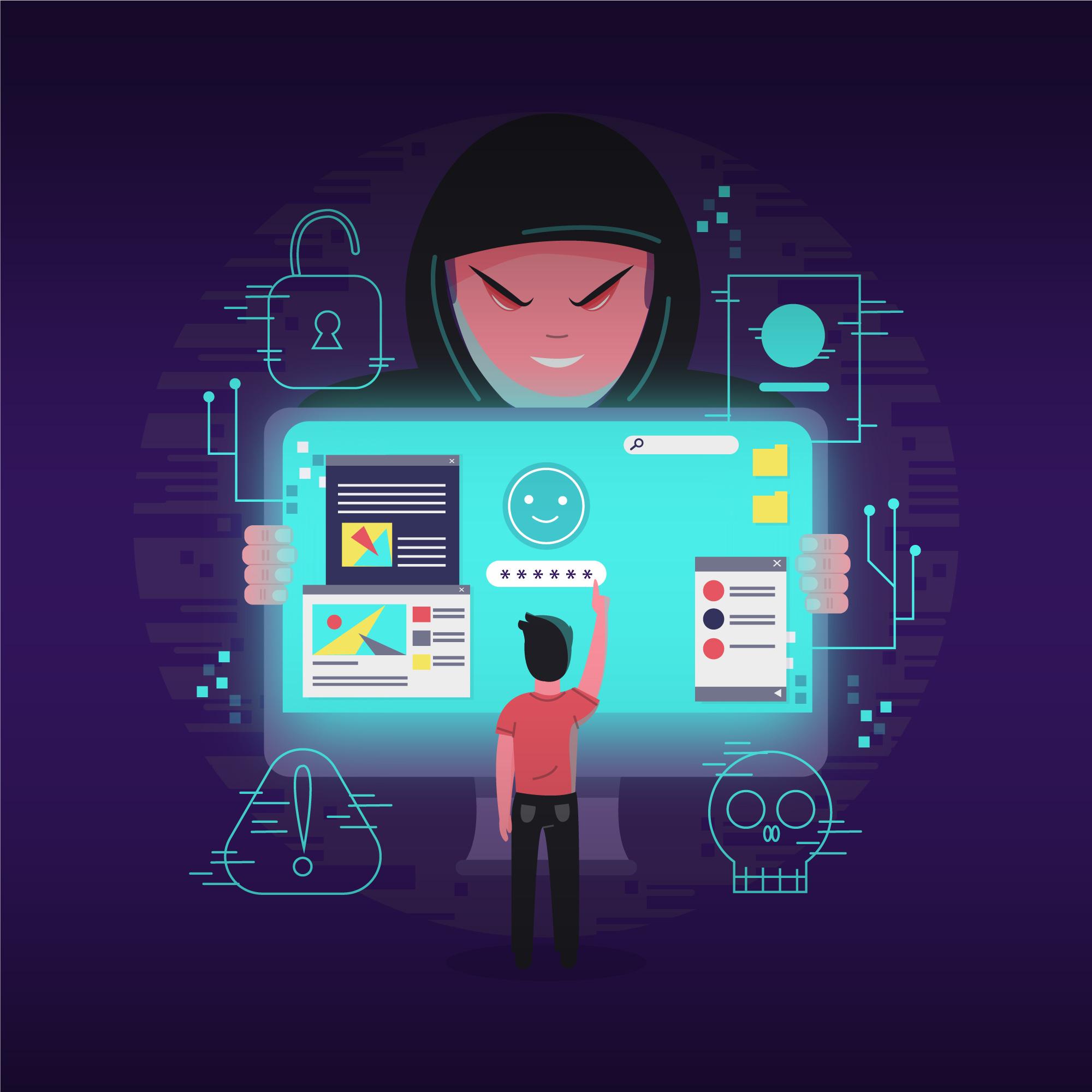
A. Speed as a Weapon: Utilizing Fraud Detection Session Stores Microsecond Latency
In the world of high-volume digital transactions, the speed of defense is everything. Fraud
Detection Session Stores Microsecond Latency refers to specialized databases designed to
analyze transaction and user session data in less than a millionth of a second. This
hyper-speed analysis enables real-time decisions, allowing a tool to block a fraudulent
purchase—for example, one associated with a high Fraud Score or low IP Score—before the
transaction clears. Leveraging real-time Fraud Analytics is the only way to effectively
counter automated bot attacks that can test millions of stolen credentials or credit cards in
minutes, a process known as enumeration fraud.
B. Protecting Identities: The Vital Role of Identity Protection and Secure Data
Handling
The ultimate prize for cybercriminals is data used for identity protection. Identity fraud
remains a pervasive and growing threat globally. Small businesses are custodians of sensitive
customer and employee information. Protecting this data is a complex task that goes beyond
simple passwords.
Key elements of identity defense include:
- Encryption: Ensuring all stored and transmitted data is unreadable to unauthorized parties.
- MFA: Requiring multiple forms of verification for high-risk access.
- Specialized Pins: Understanding government-level defense tools, such as the Internal Revenue Service Pin (IP PIN) or simply the Identity Protection Pin, which add an extra layer of protection to tax filings, serves as a high-level analogy for the type of granular protection businesses must apply to their own critical systems. This level of defense should be modeled in all high-value transactions.
C. The Specialized Defense: Introducing the concept of IP Fighter solutions
An IP Fighter represents the cutting-edge of automated anti-fraud technology. These solutions
are specifically designed to ingest and process massive risk signals—like a poor IP Quality
Score, high Fraud Score, or indicators from Scam Analytics—to instantly classify and block
malicious traffic. By focusing specifically on the source (the IP address and its associated
behavior), they stop attacks at the network perimeter, preventing them from ever reaching the
target system. This proactive blocking mechanism is what enables Fraud Prevention Solutions to
effectively deal with high-volume threats like botnets, allowing legitimate traffic to proceed
frictionlessly.
V. Implementing Cybersecurity Best Practices and Regulatory Compliance
Technology must be backed by process. Without a commitment to continuous improvement and
adherence to standards, even the most advanced tools will fail. This is why cybersecurity best
practices are non-negotiable.
Technology must be backed by process. Without a commitment to continuous improvement and adherence to standards, even the most advanced tools will fail. This is why cybersecurity best practices are non-negotiable.
A. Practical Steps: Essential Cloud Security Tips for Data Integrity
Since most modern businesses rely on cloud infrastructure, securing that environment is
critical. This is a crucial element of enterprise-cybersecurity-services-consulting. Essential
cloud security tips include:
- Implement the Principle of Least Privilege (PoLP): Restricting user access to only the resources strictly required for their job.
- Ensure Strong Authentication: Use MFA on all cloud administrator and user accounts.
- Configure Continuous Monitoring: Automating checks on cloud configurations to spot misconfigurations, which are a common cause of data breaches.
- Maintain Encrypted Backups: Keep offline and geographically separated data backups for rapid, secure recovery.
B. Compliance and Trust: Navigating Business Affairs and Consumer Protection
In an era of strict data privacy laws (like GDPR, CCPA, etc.), an effective Cybersecurity
Solutions framework is synonymous with legal and ethical compliance. Strong Cyber Security
Solutions and governance demonstrate a commitment to Business Affairs and Consumer Protection,
which builds invaluable customer trust—a critical differentiator in the marketplace.
The constant regulatory environment means that companies must ensure their Cyber Security Awareness programs include data handling and privacy compliance training. This proactive stance helps reduce risks associated with non-malicious insider threats, which remain a top concern for security professionals.
C. Review and Adaptation: The Necessity of Continuous Monitoring
Cybersecurity is not a product; it’s a continuous process of management and adaptation. The
threat landscape changes daily, meaning your defense must also evolve. Regular security
audits, penetration testing, and continuous monitoring are essential to identify and close
vulnerabilities before attackers can exploit them.
A key element of continuous monitoring is the automatic, system-wide patching and updating of all software. Automated management of this process, typically delivered through a enterprise-cybersecurity-services-consulting provider, ensures that the business is protected from the latest vulnerabilities without draining the limited IT resources of a small business.
VI. Conclusion: A Proactive Future for Small Business Protection
Small businesses have every right to a secure, resilient digital presence, but they must be
prepared to evolve their defense strategies.
The shift from outdated antivirus tools and basic firewalls to advanced AI-Powered Managed
Cybersecurity & Cloud Services | CQLsys and AI-driven Cybersecurity and Cloud Solutions are
non-negotiable for future
security.
By investing in real-time Fraud Detection that utilizes Fraud Detection Session Stores Microsecond Latency and embracing the expertise of
enterprise-cybersecurity-services-consulting, a small business gains the speed, intelligence, and resources required to counter the world’s most sophisticated digital adversaries. Prioritizing Computer Security and robust Fraud Prevention Solutions now is not just a cost; it is the most vital investment you can make in your company's long-term survival, compliance, and prosperity. Protecting your company's digital life is protecting your livelihood.
Don't wait to be a statistic. Contact a trusted provider of enterprise-cybersecurity-services-consulting today to conduct a free IP Score and vulnerability assessment and secure your business’s future against the growing wave of AI-driven fraud.